The Department of Transportation sets federal standards for the minimum safety rules for commercial driver’s licenses, drivers, and motor carriers. Texas has largely adopted federal regulations governing truck drivers.
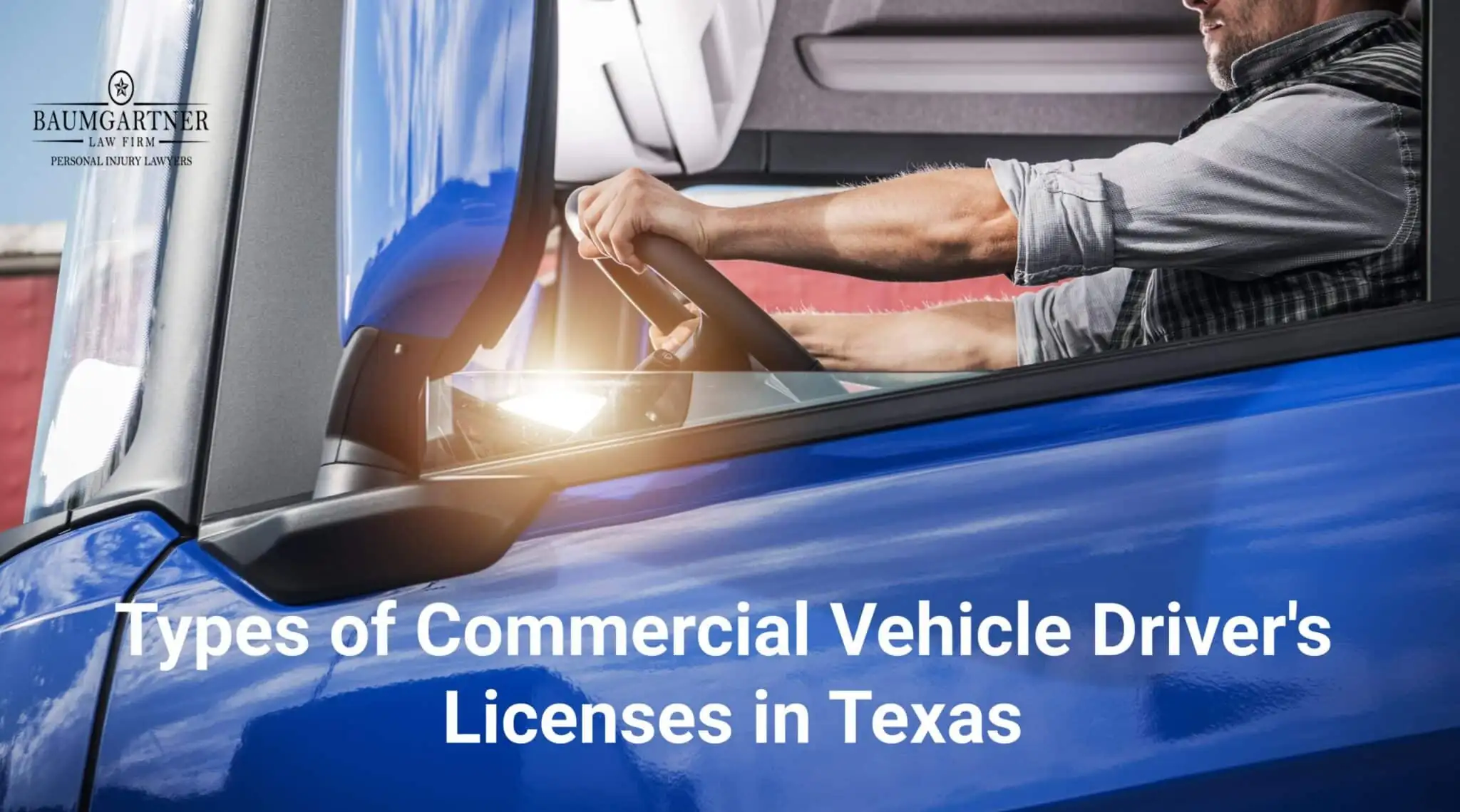
In Texas, there are three types of CDLs: Class A, Class B, and Class C. Each class has its requirements and allows you to operate different types of vehicles. In this article, we’ll explore the different types of commercial driver’s licenses in Texas and what you need to do to obtain them.
CDL classifications matter after a serious truck crash because they can show whether the driver was legally qualified to operate the vehicle involved. In a Houston truck accident case, our attorneys may examine the driver’s CDL class, endorsements, training records, medical certification, employer hiring file, and safety history to determine whether the driver or trucking company violated safety rules. If you were injured in a crash with an 18-wheeler, dump truck, tanker, bus, or other commercial vehicle, our Houston truck accident lawyer can investigate whether licensing or qualification issues contributed to the wreck.
Types of Commercial Driver’s Licenses in Texas
Class A CDL
A Class A CDL is the most common commercial driver’s license type in Texas. With a Class A CDL, you can operate any combination of vehicles with a gross vehicle weight rating (GVWR) of 26,001 pounds or more if the towed vehicle weighs more than 10,000 pounds.
Requirements for a Class A CDL
To obtain a Class A CDL in Texas, you must meet the following requirements:
- Be at least 18 years old (21 years old for interstate travel)
- Have a valid Texas driver’s license.
- Pass a vision test.
- Pass a written knowledge test.
- Pass a skills test (driving test)
- Provide proof of citizenship or legal presence in the US
- Pass a Department of Transportation (DOT) physical exam.
- Provide a valid Medical Examiner’s Certificate.
CDL Skills Test
The CDL skills test is divided into pre-trip inspection, basic vehicle control, and on-road driving. During the pre-trip inspection, you’ll be tested on your ability to inspect your vehicle for safety and mechanical issues. The basic vehicle control portion of the test will assess your ability to control the vehicle in various situations, such as backing up and turning. Finally, the on-road driving portion will assess your ability to operate the vehicle safely on public roads.
Class B CDL
A Class B CDL allows you to operate single vehicles with a GVWR of 26,001 pounds or more and any vehicle towing a trailer with a GVWR of less than 10,000 pounds. This class is typically for drivers who operate buses, dump trucks, and other heavy-duty vehicles that do not require a trailer.
Requirements for a Class B CDL
To obtain a Class B CDL in Texas, you must meet the following requirements:
- Be at least 18 years old (21 years old for interstate travel)
- Have a valid Texas driver’s license.
- Pass a vision test.
- Pass a written knowledge test.
- Pass a skills test (driving test)
- Provide proof of citizenship or legal presence in the US
- Pass a Department of Transportation (DOT) physical exam.
- Provide a valid Medical Examiner’s Certificate.
Class B CDL Skills Test
The CDL skills test for a Class B CDL is similar to the Class A test, but it does not include the pre-trip inspection portion. Instead, you’ll be tested on your ability to control the vehicle and drive safely on public roads.
Class C CDL
A Class C CDL is the most basic commercial driver’s license type in Texas. With a Class C CDL, you can operate any vehicle designed to transport 16 or more passengers (including the driver) or hazardous materials.
Requirements for a Class C CDL
To obtain a Class C CDL in Texas, you must meet the following requirements:
- Be at least 18 years old (21 years old for interstate travel)
- Have a valid Texas driver’s license.
- Pass a vision test.
- Pass a written knowledge test.
- Pass a skills test (driving test)
- Provide proof of citizenship or legal presence in the US
- Pass a Department of Transportation (DOT) physical exam.
- Provide a valid Medical Examiner’s Certificate.
CDL Skills Test
The CDL skills test for a Class C CDL is like that for a Class B CDL. Still, it may also include additional endorsements for hazardous materials or passenger transportation.
CDL Classes and Endorsements
In addition to the three main classes of CDLs, there are also various endorsements that you can obtain to expand your driving capabilities. These endorsements allow you to operate specialized vehicles or transport specific types of cargo.
Some common endorsements include:
- Passenger (P) endorsement allows you to operate vehicles designed to transport 16 or more passengers (including the driver)
- School Bus (S) endorsement allows you to operate a school bus
- Tank (N) endorsement allows you to transport liquids or gases in bulk.
- Hazardous Materials (H) endorsement: allows you to transport hazardous materials
- A Double/Triple (T) endorsement allows you to tow multiple trailers simultaneously.
You must pass a written knowledge and, sometimes, a skills test to obtain an endorsement. If a driver is involved in a truck crash case, their training and qualifications will likely be examined. Here is how to apply for a commercial driver’s license in Texas.
Why Do Truck Drivers Need Endorsements
FMCSA explains that driving a commercial motor vehicle requires a higher level of knowledge, experience, skills, and physical ability than driving a non-commercial vehicle. Truck drivers need license endorsements to operate specific types of vehicles or transport certain types of cargo legally.
Endorsements provide additional qualifications and training to ensure the driver’s safety and expertise in specialized areas. For example, the Tank Vehicles endorsement is required to operate vehicles carrying liquids or gases in bulk containers, while the Hazardous Materials endorsement allows drivers to transport hazardous materials.
Similarly, the Passenger endorsement is necessary for transporting passengers in vehicles designed for 16 or more people, and the school Bus endorsement is required to operate a school bus. The Double/Triple Trailers endorsement permits drivers to tow multiple trailers simultaneously.
Each endorsement has specific requirements, such as additional knowledge tests, background checks, and, in some cases, driving tests. These endorsements ensure drivers have the necessary skills and knowledge to handle the vehicle or cargo they are responsible for. Truck drivers need to obtain the required endorsements to comply with regulations and ensure their own and others’ safety on the road.
After an accident, a trucking accident attorney will likely scrutinize the driver’s training and qualifications.
Why a Commercial Driver’s License Matters After a Texas Truck Accident
A commercial driver’s license is more than permission to drive a large vehicle. It can also be important evidence after a serious truck accident. CDL class, endorsements, training, and medical certification can help show whether the driver was legally qualified to operate the vehicle involved in the crash.
After a collision with an 18-wheeler, dump truck, tanker truck, bus, or other commercial vehicle one of the first questions is whether the driver had the correct license for that vehicle. A Class A CDL may be required for many tractor-trailers. A Class B CDL may apply to certain heavy single vehicles. A Class C CDL may apply to vehicles carrying passengers or hazardous materials in specific situations.
Endorsements may also matter. For example, a tanker crash may raise questions about whether the driver had a tank vehicle endorsement. A crash involving hazardous materials may require review of hazmat qualifications. A bus or passenger vehicle crash may involve passenger or school bus endorsements. If the driver lacked the right CDL class or endorsement, that issue may support a negligence claim.
CDL problems may also point to broader negligence by the trucking company. A motor carrier may be responsible if it hired an unqualified driver, which may involve negligent hiring or supervision, failed to check the driver’s background, ignored safety violations, skipped required training, or allowed the driver to operate a vehicle outside the scope of the driver’s license.
In a serious truck accident case, our investigation may include the driver’s CDL history, driver qualification file, medical examiner’s certificate, training records, employer safety policies, crash history, logbooks, post-crash testing records, and vehicle maintenance records. These records can help determine whether the truck driver or trucking company followed the safety rules designed to protect the public.
CDL Evidence: Our Truck Accident Lawyers May Review
- The CDL class held by the driver
- Endorsements required for the vehicle, cargo, or passengers
- The driver’s Medical Examiner’s Certificate
- Entry-Level Driver Training records
- The driver qualification file
- Prior crashes, citations, or safety violations
- Drug and alcohol testing records
- Hours-of-service records and logbooks
- Employer hiring, training, and supervision records
- Whether the vehicle required a CDL at all
Injured in a crash with a commercial vehicle? CDL class, endorsements, training, and driver qualification records may become important evidence. Baumgartner Law Firm investigates serious truck accident cases in Houston and throughout Texas. Call (281) 587-1111 for a free consultation or contact our Houston truck accident lawyer for help.
CDL Classes and Training
Many first-time CDL applicants must complete Entry-Level Driver Training through a provider listed in the FMCSA Training Provider Registry before taking the required CDL skills or knowledge test. ELDT generally applies to drivers seeking a Class A or Class B CDL for the first time, upgrading from Class B to Class A, or obtaining a school bus, passenger, or hazardous materials endorsement for the first time.
Contact a Top-Rated Houston Truck Accident Lawyer at Baumgartner Law Firm for Help!
Contact a lawyer at Baumgartner Law Firm in Houston or reach out to us online to discuss an accident involving a big rig, semi-truck, or other commercial vehicle. Call (281) 587-1111 for a FREE Consultation on any injury accident.
6711 Cypress Creek Pkwy, Houston, TX, 77069