

When Should You Hire a Car Accident Lawyer in Houston?
Legally reviewed by Greg Baumgartner | Updated July 2026.
You should speak with a Houston car accident lawyer soon after a crash if you suffered more than a minor injury. You should also call when fault is disputed or an insurer is pushing for a statement or quick payment. Legal help is often important when the case involves a commercial vehicle, rideshare driver, child, death, or limited insurance coverage.
You may not need an attorney for a property-damage-only accident. That may be true when no one was hurt, fault is clear, and the insurer is paying all repair and rental costs. A free case review can help when you are unsure whether a lawyer would add value.
A Personal Note From Greg Baumgartner After more than 40 years of handling injury cases, I have seen two mistakes cause the most harm. The first is waiting until key evidence is gone. The second is settling before doctors know the full extent of an injury. Not every fender-bender requires a lawyer. But a crash may affect your health, work, or family. Early advice can keep a small mistake from becoming permanent. — Greg Baumgartner, Founder of Baumgartner Law Firm |
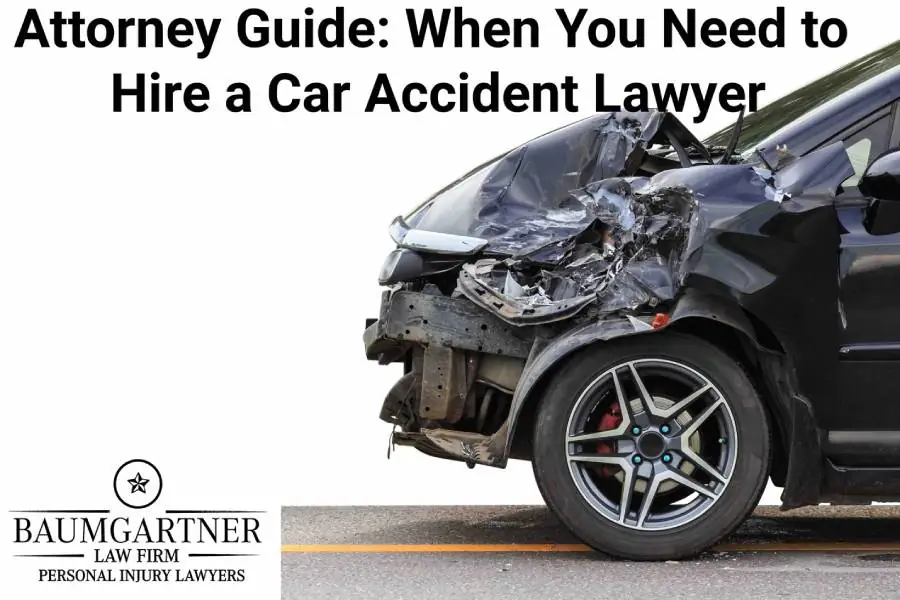
Clear Signs You Should Contact a Car Accident Lawyer
You suffered a serious or lasting injury
Call a lawyer if you were taken to the hospital or need surgery. You should also call if you have suffered a fracture, cannot work, or have symptoms that are not improving. A traumatic brain injury, spine, or spinal cord injury may require months or years of treatment. A fast settlement may not cover future care or lost earning ability. It may also ignore the lasting effect of an injury on daily life.
The other driver or insurer is blaming you
A dispute about fault can reduce a valid claim. In some cases, it can defeat the claim. Under Texas proportionate responsibility law, a person who is more than 50% responsible cannot recover damages. When the injured person is 50% responsible or less, the award is generally reduced by that percentage of fault. A prompt investigation can protect video and witness accounts. It can also preserve vehicle damage and other proof before the story changes.
An adjuster wants a recorded statement or a quick release
The other driver’s insurer may contact you very early. At that point, you may not know the full extent of your injuries. The adjuster may sound helpful, but the company’s goal is to limit what it pays. Do not guess about speed, distance, injuries, or fault. Also, do not sign a release until you understand what rights you are giving up. Learn how to respond to a low settlement offer before accepting one.
A truck, a rideshare driver, or several vehicles were involved
These crashes often involve several insurance policies. More than one person or company may be responsible. A commercial truck accident may require driver records, company policies, electronic data, and federal safety evidence. An Uber accident or Lyft accident may involve different coverage based on the driver’s app status. Multi-vehicle crashes create another problem. The insurers may disagree about how much fault each driver bears.
A child was injured, or someone died
Claims involving children require special care. A child may have future medical, school, or emotional needs. A fatal crash raises different legal and damage issues for the surviving family. Speak with an attorney experienced in a Houston wrongful death claim before discussing settlement terms with an insurer.
The other driver had no insurance or too little coverage
Do not assume there is no recovery. Your own policy may include uninsured or underinsured motorist benefits. The Texas Department of Insurance auto insurance guide explains when UM/UIM coverage may apply. It can help when the at-fault driver has no insurance or too little coverage. It may also apply after a hit-and-run. These claims can still become contested. Review our guide to Houston uninsured motorist claims for more information.
The claim was denied, delayed, or undervalued
Get legal advice if an insurer denies responsibility or ignores your calls. The same is true if it keeps asking for the same records, disputes treatment, or offers too little to cover your losses. A lawyer can identify the cause of the dispute and gather any missing evidence. The lawyer can then decide whether talks or a lawsuit make more sense.
Important evidence may disappear
Traffic-camera video may be overwritten. Businesses may erase security footage. Witnesses move or forget details. Vehicles are repaired or sold. Start by getting the Texas car accident report. Keep your photos, medical records, bills, and wage information. Our Houston post-accident checklist explains what to do in the first hours and days after a crash.







When You May Not Need a Lawyer
A lawyer may not be needed when the crash caused no injury and only minor vehicle damage. The fault should be clear. The insurer should also pay all reasonable repair, towing, and rental costs. You may be able to handle that type of property damage claim yourself.
Be careful not to decide too soon that you are not injured. Neck, back, and head symptoms can appear later. Soft-tissue pain may also worsen after the shock wears off. Get medical care if you develop pain, dizziness, numbness, weakness, confusion, or other symptoms. Do not settle a bodily injury claim until you understand your condition.
Why Early Legal Advice Can Matter
Hiring a lawyer early does not mean filing a lawsuit at once. It means someone protects the claim while you focus on your health. Early work may include:
- Preserving video, electronic vehicle data, photographs, and physical evidence.
- Locating witnesses while their memories are fresh.
- Reviewing the police report and correcting material errors with supporting proof.
- Identifying every responsible person, company, and insurance policy.
- Preventing a premature settlement before the medical picture is clear.
- Tracking legal deadlines and giving required notices.
What a Car Accident Lawyer Does for You
A good lawyer should do more than send letters to an insurance company. The work should be tied to the facts of your case and the harm the crash caused. That usually includes:
- Investigating how the crash happened and preserving evidence.
- Finding all available insurance coverage and responsible parties.
- Organizing medical records, bills, lost-income proof, and future-loss evidence.
- Handling calls, document requests, and negotiations with the adjuster.
- Evaluating offers based on the full effect of the injury, not just current bills.
- Filing a lawsuit and preparing the case for trial when the insurer will not be fair.
How to Choose the Right Houston Car Accident Lawyer
the file. Ask how often you will receive updates. Also ask whether the lawyer will take a disputed case to trial.
- Experience with serious car accident injuries and Texas insurance claims.
- Documented case results and client reviews.
- Direct access to the lawyer responsible for your case.
- A clear explanation of fees, case expenses, and the client’s responsibilities.
- A willingness to give an honest answer, even when the case may not require representation.
What Does It Cost to Hire a Car Accident Lawyer?
Most personal injury lawyers use a contingency fee. That means the attorney fee is paid from a recovery rather than charged by the hour. Before hiring a firm, ask for the fee terms in writing. The agreement should explain the percentage and how case expenses are handled. It should also say whether the percentage changes after a lawsuit or appeal.
Baumgartner Law Firm offers free consultations and charges no attorney fee unless the firm recovers money for the client.
How Long Do You Have to Hire a Lawyer or File a Case?
In most Texas car accident cases, the general deadline is two years from the date of the crash. Some claims have shorter notice rules. Limited exceptions can also change the deadline. Waiting makes evidence harder to find. Speak with a lawyer well before the two-year date rather than treating it as a safe waiting period.
Frequently Asked Questions
How soon after a Houston car accident should I call a lawyer?
First, get to safety and seek needed medical care. Then call as soon as practical if the crash involved an injury or disputed fault. Early help is also wise when a commercial vehicle, several drivers, or insurance problems are involved. Early advice helps preserve evidence and prevent avoidable mistakes.
Is it worth hiring a lawyer after a car accident?
It often is when injuries are serious or treatment is ongoing. It can also help when fault is disputed or the available insurance is unclear. A lawyer may add little value to a simple property-damage claim with no injuries and no coverage dispute.
Should I give the other driver’s insurer a recorded statement?
Usually, get legal advice first. You do not have to help the other driver’s insurer build a defense. Your own policy may require reasonable cooperation, so do not ignore your insurer. Ask what is required. Keep your answers accurate and limited to facts you know.
Can I recover if I was partly at fault?
Possibly. Texas law generally allows recovery when your share of fault is 50% or less. The award is reduced by that share. You cannot recover when your responsibility is greater than 50%.
Should I accept the insurance company’s first offer?
Not until you know the extent of your injuries and future treatment. You should also know your lost income and other losses. A signed release normally ends the claim, even if your condition becomes worse later.
What if the at-fault driver is uninsured?
Check your policy for UM/UIM coverage, personal injury protection, medical payments coverage, and collision coverage. An attorney can also investigate other policies or responsible parties that may apply.
Related Resources:
For a FREE Consultation Contact Us Today
"*" indicates required fields
Related Links
Our Experienced Houston Personal Injury Lawyer Can Help!
For a Free Consultation with a Preeminent Rated Injury Lawyer
Case Results
$5,750,000.00 Truck Accident - Wrongful Death
We represented a truck driver who lost control of his rig and jackknifed across the roadway, killing two innocent victims. We obtained more money for the death of the truck driver who caused the accident than the other “truck accident lawyers” got for the families of the innocent victims killed by the truck driver in the accident.
$6,000,000.00 Daycare Injury
We represented a young child injured at a daycare center. The case was settled before trial for millions above the daycare liability policy.
Confidential Settlement Commercial Vehicle Crash - Wrongful Death
Commercial vehicle accident in which we uncovered numerous violations of the trucking regulations. The trucking company required a confidential settlement so others would not know how much they had to pay us.
Confidential Settlement Burn Injury
Our client was burned in a house fire. The insurance company denied any responsibility. But they paid our full demand after filing a lawsuit and before trial.
Confidential Settlement 18-Wheeler Accident - Wrongful Death
Wrongful death case involving an 18-wheeler. The trucking company disputed liability. Yet, the insurance companies were forced to pay us the highest damages ever for the trucking company.
Talk With Greg Baumgartner About a Houston Car Accident
Baumgartner Law Firm has represented injured Texans since 1985. We limit the serious injury and wrongful death cases we accept. This allows us to give each client personal attention. Your consultation is free, and there is no attorney fee unless we recover money for you.
Contact Baumgartner Law Firm for a free case review or call (281) 587-1111.
testimonials
Client Reviews
Mayra T
Houston Personal Injury Victim
Mr. Greg is a great personal injury lawyer. Looking for the best help? Call Baumgartner Law Firm!
Brian Wilson
Houston Personal Injury Victim
I highly recommend this law office. Greg Baumgartner is knowledgeable, dependable, honest and truly has the client’s best interests at heart.
Callie M
Houston Personal Injury Victim
Greg, a personal Injury Lawyer at Baumgartner Law Firm represented me in my personal injury case. I am very happy with the case result. Baumgartner is a GREAT law firm with GREAT people. They get RESULTS.
Cindy S
Houston Personal Injury Victim
My experience with Baumgartner law firm was excellent. They took the time to hear my concerns and kept me informed throughout the process. They fought for the best resolution for my case. Working with Greg and Lissa gave me peace of mind in a scary and stressful situation. I highly recommend their services.
Mr. Greg is a great personal injury lawyer. Looking for the best help? Call Baumgartner Law Firm!
Mayra T
Houston Personal Injury Victim
I highly recommend this law office. Greg Baumgartner is knowledgeable, dependable, honest, and truly has the client's best interests at heart.
Brian Wilson
Houston Personal Injury Victim
Greg, a personal Injury Lawyer at Baumgartner Law Firm represented me in my personal injury case. I am very happy with the case result. Baumgartner is a GREAT law firm with GREAT people. They get RESULTS.
Callie M
Houston Personal Injury Victim
My experience with Baumgartner law firm was excellent. They took the time to hear my concerns and kept me informed throughout the process. They fought for the best resolution for my case. Working with Greg and Lissa gave me peace of mind in a scary and stressful situation. I highly recommend their services.
Cindy S
Houston Personal Injury Victim
NEED HELP? HAVE QUESTIONS?
"*" indicates required fields