


Some of our recent car accident case results.
| Recovery | Case |
| $6 million | Fatal car accident case. The defense blamed the victim. |
| $5 million | Serious car accident involving a brain injury. Damages were disputed. The case settled in trial |
| $950,000 | Rear-end collision involving multiple rib fractures and a lumbar spine injury. |
| $550,000 | Back-injury car accident claim in which liability was denied and blame was shifted to our client; resolved shortly before trial. |
Table of Contents
What I Look at First in a Serious Houston Car Accident Case
After more than four decades of handling serious injury cases, I know maximizing your compensation starts with the evidence—the facts that prove what happened, show the full impact of your injuries, and give us leverage with the insurance company.
How did the crash happen?
The police report matters, but it is only one piece of the story. I want photographs, video, witness information, vehicle damage, traffic controls, and any electronic evidence that may help explain the collision. In a disputed case, small details can become important later.
What evidence could be lost?
Houston is full of cameras, but video is not kept forever. Businesses, apartment complexes, parking facilities, toll systems, and private security systems may overwrite footage. Witnesses move, memories fade, and damaged vehicles get repaired or sold. When the injuries are serious, I would rather investigate early than try to recreate missing evidence months later.
Does the medical story fit the crash?
Insurance companies look for gaps in treatment, prior injuries, inconsistent symptoms, and anything else they can use to argue the crash didn’t cause the problem. I review the full medical timeline: what changed after the collision, what the doctors found, what treatment is still needed, and whether the injury affects work or daily life.
Where is the insurance coverage?
In a major injury case, identifying every available policy can be as important as proving fault. The obvious driver may not be the only source of coverage. Employer policies, rideshare coverage, commercial policies, and uninsured or underinsured motorist benefits can matter depending on the facts.
Can I prove the case if a lawsuit becomes necessary?
Most car accident claims settle, but a strong settlement position comes from being prepared to prove the case. From the beginning, I consider which witnesses, records, experts, and medical evidence we may need if the insurance company disputes fault, the cause of the injuries, or the claim’s value. Filing a lawsuit is not always necessary. Careful preparation, however, gives my client options and shows the insurer we’re ready to take the case further if we can’t reach a fair resolution.
What Should You Do in the First 48 Hours After a Houston Car Accident?
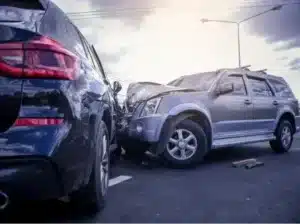 Protect your health first. Then protect the evidence. You do not need to build your own lawsuit from the side of the road, but a few basic steps can prevent avoidable problems.
- Get medical care when you are hurt or develop symptoms. Adrenaline can hide pain for hours.
- Call the police when required under Texas crash reporting law, and ask how to obtain the crash report.
- Call 911 for emergencies. For non-emergency police service within Houston city limits, call 713-884-3131; see Houston police non-emergency contact information.
- Take photographs or video of the vehicles, road, traffic controls, visible injuries, and anything else that may explain what happened.
- Get the witnesses’ names and phone numbers before they leave.
- Save bills, repair estimates, towing records, photographs, emails, texts, and proof of missed work.
- Be accurate when you speak. Don’t guess about speed, distance, fault, or injuries you don’t yet understand.
- Do not sign a release just because an insurer offers quick money before the medical picture is clear.
If your car breaks down on a Houston freeway, get to a safe place and call 911 if anyone is hurt or the vehicle poses an immediate danger. Houston Tow and Go can move an eligible stalled vehicle off a Houston freeway to a nearby safe location at no charge; call 713-881-3333. Houston TranStar’s Motorist Assistance Program offers free roadside help, such as changing a flat tire or jump-starting a vehicle, on Harris County area freeways; call 713-CALL-MAP (713-225-5627). MAP operates Monday through Friday, excluding Harris County holidays.
The Texas Department of Insurance’s auto-claim guidance also recommends documenting the scene, collecting driver information, and keeping claim records. If you do not have the crash report yet, here is how to get a Houston accident report.
When Does It Make Sense to Hire a Houston Car Accident Lawyer?
 Not every fender-bender needs a lawyer. A property-damage-only claim with no injury and no coverage dispute may be something you can handle on your own. Legal help matters more when the crash causes serious injury, fault is disputed, multiple vehicles are involved, a business or rideshare driver may be responsible, insurance coverage is unclear, or the adjuster pressures you for a statement or a quick release.
Two problems I repeatedly see throughout my career in representing car accident victims: people don’t act quickly to get the right lawyer, or they settle before they know the full extent of an injury. Getting advice early does not mean filing a lawsuit immediately. It means understanding what you need to do before a decision becomes hard to undo.
How Much Does a Houston Car Accident Lawyer Cost?
The consultation is free. If we take your car accident case, you do not pay an attorney fee up front. We work on a contingency fee, which means our attorney fee comes from the recovery if we obtain money for you. Before you hire us, I explain the fee percentage and how we’ll handle case expenses in the written agreement. You can ask about both before deciding whether we are the right firm for your case.
Seriously Injured in a Houston Car Accident?
Call Baumgartner Law Firm at (281) 587-1111 to speak directly with Greg Baumgartner,
or request a free, confidential consultation today.
No attorney fee unless we recover money for you.
Where Serious Houston Car Accidents Happen
Houston car crashes are not all alike. A high-speed wreck on I-45 can present very different evidence and injury issues from a collision at a neighborhood intersection.
We see major crashes on I-45, I-10, I-69/US-59, Loop 610, Beltway 8, Highway 290, Highway 249, FM 1960, and major surface streets throughout Harris County. Freeway cases may involve multiple vehicles, lane-change disputes, commercial traffic, severe impact forces, and video or roadway evidence that must be located quickly. Intersection cases often turn on who had the right of way, who failed to yield, whether a driver was distracted, and whether nearby businesses captured the collision.
According to TxDOT’s 2025 Crashes and Injuries by Cities and Towns report, Houston had 60,317 reportable motor vehicle crashes in 2025, with 1,465 suspected serious injuries. You can request an official crash report through TxDOT’s Crash Records Information System.
Statistics help show the scope of the problem, but they do not prove why one particular crash happened. That still requires evidence from the individual case.
What Insurance Companies Commonly Dispute
Insurance companies have a financial interest in limiting what they pay. Its adjuster will examine your claim closely. If you file a lawsuit, a defense lawyer may press the same issues. Expect questions about:
the crash caused the injury
A prior neck, back, shoulder, or knee problem does not automatically defeat a claim, but the medical history will matter. The key question is often what changed after the collision and whether the medical evidence connects that change to the crash.
Whether the treatment was reasonable and necessary
The insurer may question the length of treatment, specialist referrals, injections, surgery recommendations, or gaps in care. That is why consistent medical documentation matters.
Whether you share part of the blame
In Texas, even a partial-fault argument can change how much you recover. Adjusters know that disputed lane changes, speed, following distance, and right-of-way issues often receive close attention.
Whether future losses are actually proven
Future medical care, reduced earning ability, impairment, and long-term limitations need evidence. A serious claim is stronger when medical, vocational, employment, or other reliable evidence supports the future rather than estimates alone.
Texas Laws That Can Affect a Houston Car Accident Claim
Texas law can affect both the value of a car accident claim and the steps you must take after a serious crash. After more than 40 years of handling car accident injury cases, I have learned that proving fault is only part of the job. We also need to know what insurance is available. We need to spot any special deadline. We also need to show which traffic rules apply to the facts of the wreck.
Texas Drivers Are Only Required to Carry 30/60/25 Liability Coverage
Texas requires most drivers who buy liability insurance to carry at least $30,000 for injury to one person, $60,000 total for injuries in one crash, and $25,000 for property damage. These limits are known as 30/60/25 coverage.
Those numbers matter. A $30,000 injury limit may be enough for a smaller claim. It can be far too little when a crash causes surgery, a brain injury, spinal damage, lasting limitations, or months away from work.
When I see a serious injury, I do not assume the other driver’s policy is the only source of recovery. I want to know whether an employer, rideshare company, business, vehicle owner, or another legally responsible party may be involved. I also review your own auto coverage. The goal is to identify all applicable policies to maximize compensation.
The Texas Department of Insurance auto insurance guide also explains the state’s minimum limits and warns that minimum coverage may not be enough after a major crash.
Uninsured and Underinsured Motorist Coverage May Provide Another Source of Recovery
Uninsured motorist coverage, or UM, may apply when the driver who caused the crash has no insurance. It may also apply when the driver cannot be found after a hit-and-run. Underinsured motorist coverage, or UIM, may apply when the at-fault driver has insurance but not enough to cover the injured person’s losses.
Texas law requires auto insurers to offer UM/UIM coverage unless the insured rejects it in writing. See Texas Insurance Code Section 1952.101. In a serious Houston crash, this coverage can be very important when the other driver has only minimum limits.
One point I make to clients is that a UIM claim is not just a request for the unpaid balance. You still have to prove the claim. Fault, injuries, damages, coverage, and the policy terms all matter.
Texas Traffic Laws Can Help Establish Fault
A traffic ticket does not decide a civil injury case on its own. Still, Texas traffic laws often help show whether a driver acted safely. Violations can also help show whether that conduct caused the crash.
Several rules come up often in Houston car accident cases:
- Following distance. Texas Transportation Code Section 545.062 requires drivers to leave enough clear distance to stop safely based on speed, traffic, and road conditions. This rule often matters in rear-end and chain-reaction crashes.
- Unsafe lane changes. Section 545.060 says a driver on a marked road may not change lanes unless the move can be made safely.
- Section 545.351 requires a speed that is reasonable and safe for the conditions. Drivers must also control speed as needed to avoid a crash. The posted speed limit is not always the only issue.
- Traffic signals. Section 544.007 covers red, yellow, and green traffic signals and the duties tied to them. Signal timing, right-of-way, witnesses, and video can be critical in intersection crashes.
A traffic-law violation can be important evidence. It does not automatically answer every fault question. I still want the physical evidence, video, witness accounts, vehicle damage, and the full sequence of events. A rear-end crash on Loop 610 may depend on following distance and speed. An I-45 wreck may center on a lane change. A crash on FM 1960 may come down to who had the light and whether video confirms it.
Claims Involving the City of Houston Can Have Much Shorter Notice Deadlines
The standard two-year lawsuit deadline is not the only deadline that matters. Claims involving a government unit may be subject to special notice rules. Those rules can require action much sooner.
Under Texas Civil Practice and Remedies Code Section 101.101, a government unit generally has six months to receive notice of a claim after the incident. Texas law also recognizes valid city charter notice rules. The City of Houston’s claim notice page states that its charter requires written notice within 90 days for covered claims against the City.
This can matter when a crash involves a City vehicle or a government worker on duty. It can also matter in certain claims involving government property, road conditions, or traffic control. Government immunity and legal exceptions can make these cases harder. Government involvement does not automatically mean a claim is valid.
Drivers Have Legal Duties After a Texas Collision
Texas law imposes duties on drivers after many crashes. Under Transportation Code Section 550.021, a driver involved in a crash that results in or is reasonably likely to result in injury or death must stop. The driver must determine whether someone needs assistance and remain at the scene while completing the required duties.
Section 550.023 also requires drivers in covered crashes to provide identifying and insurance information. It also requires reasonable aid to an injured person when needed. Section 550.026 requires immediate notice to the proper law-enforcement agency when a crash causes injury or death. It also applies when a vehicle cannot be driven normally and safely.
Leaving the scene does not, by itself, prove who caused the original crash. But it can create separate legal problems. It can also make it harder to identify the driver, find insurance, and save evidence.
What Compensation Is a Houston Car Accident Claim Worth?
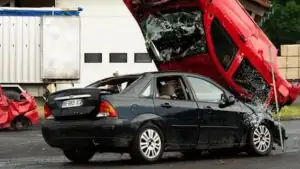 No honest average can tell you what a Houston car accident claim is worth. The value depends on the seriousness of the injuries, the strength of the evidence, available insurance coverage, medical proof, lost income, future needs, and whether the injured person shares responsibility for the crash.
Depending on the facts, compensation may include past and future medical expenses, lost wages, reduced earning capacity, physical pain, mental anguish, physical impairment, disfigurement, and property damage. Different damages may be available when a collision results in death.
In a serious injury case, I am usually more concerned with what the injury will cost and take away from my client over the next five, ten, or twenty years than with the emergency-room bill from the first night. A fair evaluation should consider future treatment, permanent limitations, whether the client can return to the same work, and how the injury changes daily life. A temporary injury followed by a full recovery is very different from a case involving surgery, brain injury, spinal damage, or permanent loss of earning ability.
What if You Were Partly at Fault?
You may still recover damages if your share of responsibility is 50% or less. Your percentage of fault reduces your recovery. If your percentage exceeds 50%, Texas law bars recovery.
For example, if proven damages were $100,000 and you were found 20% responsible, the recoverable amount would be reduced to $80,000. That is why evidence about speed, right-of-way, lane position, signals, and driver conduct can directly affect your recovery.
The rule is found in the Texas Civil Practice and Remedies Code, Chapter 33, including the 51% bar in Section 33.001.
Types of Houston Car Accident Cases We Handle
The type of collision can affect fault, evidence, insurance, and injury severity. We handle serious cases involving:
- Rear-end collisions and chain-reaction crashes
- T-bone and side-impact collisions
- Intersection and failure-to-yield accidents
- Highway and freeway crashes
- Distracted driving and texting accidents
- Speeding and unsafe lane-change crashes
- Hit-and-run accidents
- Uninsured and underinsured motorist claims
- Passenger injury claims
- Drunk-driving collisions
- Rideshare and company-vehicle crashes
Common Injuries After a Serious Car Accident
Car crashes can cause injuries that are obvious at the scene and others that appear later. Common claims involve neck and back injuries, herniated discs, fractures, shoulder and knee injuries, nerve damage, internal injuries, concussion, traumatic brain injury, and spinal cord damage.
One lesson I have learned is not to judge an injury only by how the person feels in the first hour. Adrenaline can mask symptoms. At the same time, a legal claim should be based on medical evidence, not assumptions. Prompt evaluation and accurate follow-up give both the patient and the case a clearer picture.
Seriously Injured in a Houston Car Accident?
Call Baumgartner Law Firm at (281) 587-1111 to speak directly with Greg Baumgartner,
or request a free, confidential consultation today.
No attorney fee unless we recover money for you.
How Long Do You Have to File a Car Accident Lawsuit in Texas?
In most Texas personal injury cases, the statute of limitations is two years from the date the claim accrues. Missing that deadline can forfeit the right to sue, even when the underlying case is strong.
The general rule appears in Texas Civil Practice and Remedies Code Section 16.003. Some cases can involve different or shorter notice requirements, so the safest approach is not to use the two-year date as an investigation deadline. See our guide to the Texas car accident statute of limitations.
From a practical standpoint, waiting also creates a separate problem: evidence can disappear long before the statute expires.
Why Hire Greg Baumgartner for a Serious Houston Car Accident?
 I have handled personal injury cases for more than 40 years. I hold two law degrees and graduated from the Trial Lawyers College. My practice focuses on serious injury and wrongful death cases, and I handle the matters my firm accepts.
- Houston personal injury practice founded in 1985
- 40+ years of personal injury experience
- Dual law degrees
- Trial Lawyers College graduate
- AV Preeminent recognition, Martindale
- Super Lawyers recognition
- National Trial Lawyers Top 100 recognition
- Selective, low-volume caseload
- Free consultation and no attorney fee unless we recover compensation