|
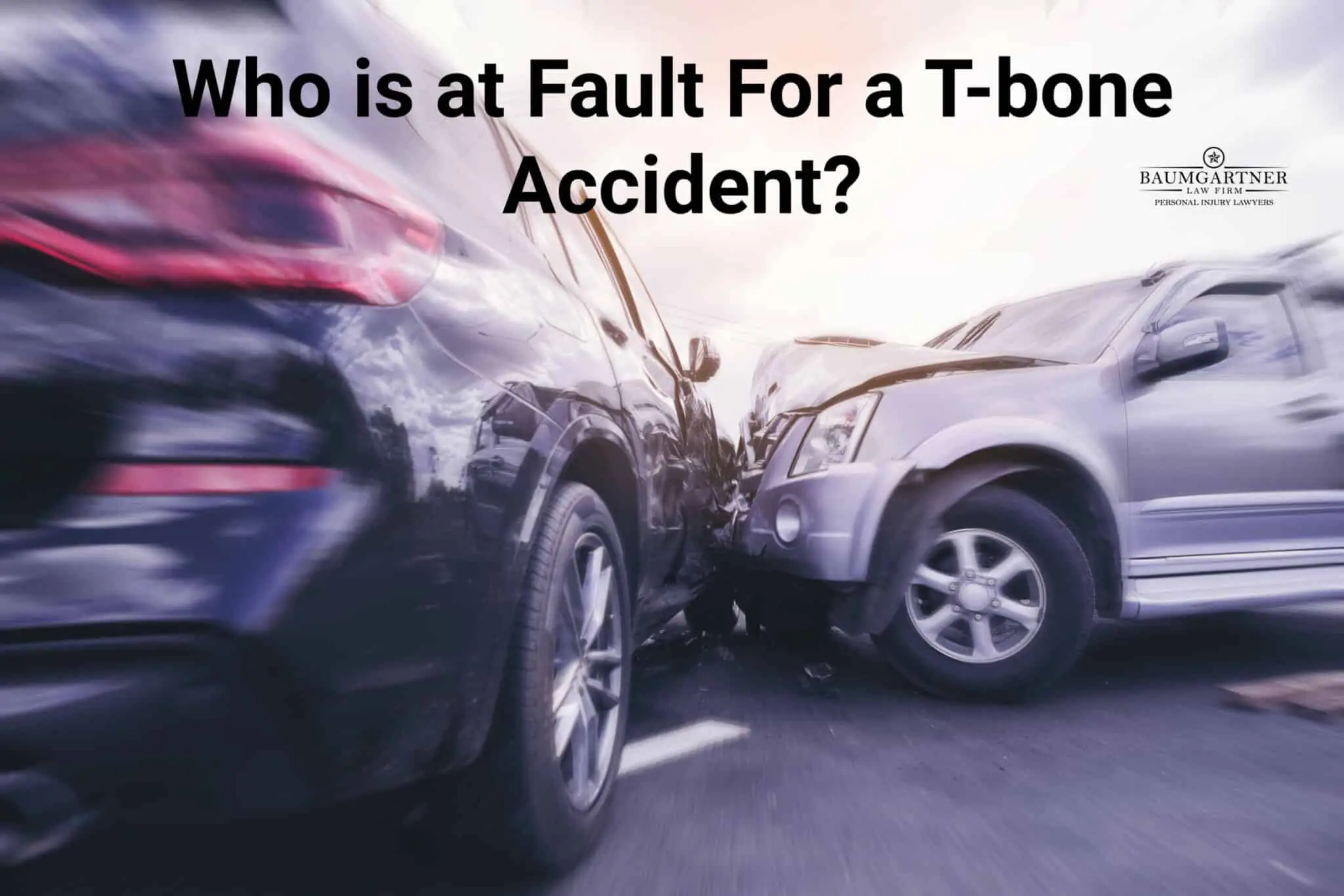
Quick Answer The driver who violates the right-of-way is usually at fault in a T-bone accident in Texas. That may be a driver who ran a red light, failed to stop at a stop sign, made an unsafe left turn, or failed to yield before entering traffic. The driver whose front end struck the other vehicle is not automatically responsible. Fault depends on what each driver did and what the evidence proves. |
T-bone crashes often happen in a few seconds. One driver may be certain the light was green. The other may say the same thing. When stories conflict, the damage to the cars, video, witnesses, traffic-signal records, and other evidence can become more important than either driver’s memory.
This guide explains how Texas law applies to side-impact crashes. For information about legal representation after a serious injury, see our Houston T-bone accident lawyer page.
A T-Bone Impact Does Not Automatically Show Who Was at Fault
A T-bone accident happens when the front of one vehicle strikes the side of another. These crashes are also called side-impact or broadside collisions. They often occur at intersections, but they can also happen at driveways, parking lots, and private roads.
People sometimes assume the driver who hit the side of the other car must be at fault. That is not a safe conclusion. A driver may enter an intersection against a red light and cross directly in front of a vehicle that has no time to stop. In that situation, the vehicle with front-end damage may still have had the right of way.
The better question is: Which driver had the legal duty to stop, yield, or wait? Our broader guide to determining fault in a Texas car accident explains how negligence and evidence are used to answer that question.
Common T-Bone Accident Fault Scenarios
The facts of each crash matter, but the following patterns are common in Texas side-impact cases:
|
Crash scenario |
Driver often at fault |
Evidence that may matter |
|
A driver runs a red light |
The driver who entered on red |
Traffic video, signal timing, witnesses, vehicle positions |
|
A driver ignores a stop or yield sign |
The driver who failed to stop or yield |
Crash report, video, witness statements, sight lines |
|
A driver turns left across traffic |
Usually, the turning driver, unless the oncoming driver also acted negligently |
Speed evidence, light color, lane position, point of impact |
|
Both drivers claim a green light |
Disputed until the evidence is reviewed |
Independent witnesses, cameras, signal records, vehicle data |
|
A driver pulls from a driveway or private road |
Usually, the driver enters the roadway without yielding |
Surveillance video, roadway view, damage patterns |
|
Both vehicles back from parking spaces |
One or both drivers |
Backup-camera video, witness accounts, direction of travel |
|
One driver enters while speeding or distracted |
Fault may be shared |
Event data, phone records, video, reconstruction |
Red-Light T-Bone Accidents
A driver must obey a traffic signal. Texas Transportation Code §544.007 explains what drivers must do when a signal displays green, yellow, or red. A driver who enters a red light and causes a side-impact collision is often at fault.
The hard part is proving which light was red. A ticket or police report may help, but it may not settle the issue. Nearby store cameras, dashcams, intersection cameras, and people who saw the light can be critical.
Stop-Sign and Yield-Sign Crashes
A driver approaching a stop sign must stop and yield to traffic that is already in the intersection or close enough to be an immediate danger. A driver at a yield sign must slow down and yield when needed. These duties appear in Texas Transportation Code §545.153.
Running the sign is not the only way a driver can be at fault. A driver may stop but still pull out when there is not enough time or distance to cross safely. Our guide to Texas right-of-way rules explains what yielding means in everyday driving.
Left-Turn T-Bone Accidents
The driver making a left turn must usually yield to oncoming traffic in the intersection or close enough to be an immediate hazard. That rule is stated in Texas Transportation Code §545.152.
Still, the turning driver is not always fully responsible. The oncoming driver may have been speeding, looking at a phone, driving without headlights, or entering after the signal changed. Read more about who is at fault in a Texas left-turn accident.
Driveway and Private-Road Accidents
A driver entering a highway from a driveway, alley, building, or private road must yield to vehicles approaching on the roadway. See Texas Transportation Code §545.155. A driver who pulls into moving traffic and causes a T-bone crash is often at fault.
Uncontrolled Intersections
At an intersection without a traffic signal or sign, the right-of-way rules can be less familiar. Texas Transportation Code §545.151 addresses several types of uncontrolled intersections. In many situations, a driver must yield to a vehicle that entered from the right or is approaching from the right closely enough to create a hazard.
Because the intersection layout matters, a map, road markings, sight lines, and vehicle positions should be carefully reviewed. Our Houston intersection accident lawyer page discusses evidence problems that often arise in these crashes.
Parking-Lot T-Bone Accidents
Parking-lot fault depends on how the vehicles were moving. A driver backing out of a parking space should watch for oncoming traffic. A driver moving through the lane must also keep a proper lookout and drive at a safe speed.
When both vehicles are back at the same time, both drivers may share fault. When one vehicle is stopped or nearly finished backing, the other driver may bear greater responsibility. Store cameras and backup-camera footage often provide the clearest answer.
Can Both Drivers Be at Fault for a T-Bone Accident?
Yes. Texas uses a proportionate-responsibility system, also known as modified comparative fault. Under Texas Civil Practice and Remedies Code §33.001, an injured person cannot recover damages when that person is more than 50 percent responsible.
If the injured person is 50 percent or less at fault, the recovery is generally reduced by that percentage under Texas Civil Practice and Remedies Code §33.012. For example, a $100,000 damages finding would be reduced to $80,000 if the injured person were found 20 percent responsible.
Shared fault may apply when one driver failed to yield, but the other driver was speeding. It may also apply when one driver entered late on a yellow light while the other made an unsafe turn. Learn more about how speeding can affect fault in a Houston accident.
How Do You Prove Fault in a T-Bone Accident?
Fault should be based on evidence, not assumptions about which vehicle struck the other. The most useful proof may include:
- Traffic-camera, dashcam, doorbell-camera, or business-surveillance video
- Independent witness names, phone numbers, and statements
- The police crash report and any traffic citations
- Photos showing vehicle damage, debris, skid marks, lane markings, and final positions
- Traffic-signal sequencing, timing, and maintenance records
- Vehicle event data, sometimes called black-box data
- Cellphone records when distraction is a disputed issue
- Road design, visibility, weather, and lighting conditions
- Medical records that connect the side impact to the injuries
- Accident-reconstruction analysis in serious or disputed cases
The video should be requested quickly. Many businesses and property owners record over footage within days or weeks. The vehicles may also be repaired, sold, or destroyed. When the crash is severe, an accident reconstruction expert may use damage patterns, measurements, photographs, and vehicle data to explain how the collision happened.
What If Both Drivers Say They Had a Green Light?
This is one of the most common disputes in a T-bone case. A police officer may not have seen the crash. The officer may record both statements but be unable to decide who entered on red.
Start by looking for neutral proof. Ask nearby businesses, homes, apartment properties, buses, and other drivers about video. Find witnesses before they leave. Photograph the signal heads and the direction each car traveled. Signal timing records may show whether both directions could have received a green light at the same time.
Vehicle damage can also help. The angle and location of the impact may show which car entered first, whether a driver tried to brake, and where the collision occurred inside the intersection.
Who Decides Fault: Police, Insurance Companies, or a Jury?
A police officer may investigate the crash, issue a citation, and state an opinion in the report. That information can carry weight with insurance adjusters, but the officer does not make the final legal decision in a civil injury claim.
Insurance companies make their own liability decisions when handling claims. They may accept fault, deny the claim, or assign a percentage of blame to each driver. Their decision is not final either. If the parties cannot agree and a lawsuit is filed, a judge or jury may decide fault from the evidence.
You can usually get a Houston accident report online after it becomes available. Review it for incorrect lanes, directions of travel, witness information, or statements that do not match what happened.
What If the Traffic Signal Was Not Working?
A dark, flashing, blocked, or poorly timed signal can change the investigation. Drivers still must use reasonable care, but a public agency, contractor, or maintenance company may also be involved if a dangerous signal problem caused the crash.
Claims involving a government unit may have notice rules and deadlines shorter than the standard filing period. Photograph the signal, report the problem, identify witnesses, and seek legal advice promptly.
What to Do After a T-Bone Accident
Your health comes first. T-bone crashes can cause serious head, chest, spine, hip, and internal injuries because the side of a vehicle offers less space to absorb an impact. See our guide to common injuries associated with T-bone accidents.
- Call 911 when anyone may be injured, traffic is blocked, fault is disputed, or a driver may be intoxicated.
- Get medical care. Do not assume you are unhurt because pain has not started yet.
- Photograph the vehicles, damage, traffic signals, signs, lanes, debris, skid marks, and visible injuries.
- Get names and phone numbers from witnesses before they leave.
- Exchange driver, vehicle, and insurance information without arguing about fault.
- Report the crash to your own insurer with accurate basic facts.
- Do not guess about speed, distance, or the light color. Say you do not know when you do not know.
- Preserve video, photos, messages, medical records, repair documents, and proof of missed work.
For a complete checklist, read what to do after a Houston car accident. Be careful when an adjuster asks for a recorded interview. You are generally not required to give a recorded statement to the other driver’s insurer. Your own policy may require reasonable cooperation, so do not ignore your insurer. Learn what to say when an insurance company asks for a recorded statement.
What Compensation May Be Available?
A person injured by a negligent driver may seek compensation for losses caused by the crash. Depending on the facts, those losses may include medical expenses, future care, lost income, reduced earning ability, physical pain, mental anguish, disability, disfigurement, and property damage.
The amount depends on the injuries, proof of fault, available insurance, treatment needs, and how the crash affects daily life. Serious side-impact cases should not be valued from an online average or an early insurance offer.
How Long Do You Have to File a Texas T-Bone Accident Lawsuit?
In most Texas personal injury cases, Texas Civil Practice and Remedies Code §16.003 provides a two-year deadline to file suit. Some cases have different or shorter deadlines, including certain claims involving government units. Evidence can also disappear long before the filing deadline, so waiting is risky.
When Should You Contact a Lawyer?
Not every minor collision requires a lawyer. Legal help becomes more important when someone has suffered a serious injury, fault is disputed, both drivers claim a green light, video must be preserved, the insurer is blaming you, or several people or insurance policies may be involved.
After handling serious injury car accident claims since 1985, we have seen how quickly useful evidence can disappear. Early investigation does not change the facts. It helps protect the facts that already exist.
Frequently Asked Questions
Is the driver who T-bones another car always at fault?
No. The driver with front-end damage is not automatically at fault. Liability usually depends on which driver violated a traffic signal, stop sign, yield rule, left-turn duty, or other right-of-way rule.
Who is at fault when both drivers say they had a green light?
Fault must be decided from other evidence. Video, witnesses, traffic-signal records, vehicle damage, and event data may show which driver entered the intersection at the wrong time.
Is the left-turning driver always at fault in Texas?
No. The left-turning driver usually has a duty to yield, but the oncoming driver may share fault for speeding, running a red light, distraction, or another unsafe act.
Can both drivers be responsible for a T-bone accident?
Yes. Texas allows responsibility to be divided among the people who contributed to a crash. An injured person generally cannot recover if found more than 50 percent responsible.
Does a police report decide who is legally at fault?
No. A report and citation may be important, but they do not make the final legal decision. Insurers evaluate fault, and a judge or jury may decide it if the case is disputed.
Who is at fault for a parking-lot T-bone accident?
It depends on the vehicles’ movement and the available evidence. A driver backing from a space may be at fault, but a speeding or inattentive driver in the travel lane may also share responsibility.
What evidence can prove that a driver ran a red light?
Useful evidence may include intersection video, dashcams, nearby surveillance footage, witness statements, signal records, vehicle data, and the location and angle of the impact.
How long do I have to file a T-bone accident claim in Texas?
The general deadline for a Texas personal injury lawsuit is two years, but exceptions and shorter notice periods may apply. It is safer to investigate and protect evidence well before that deadline.
Hurt in an Accident? Contact Baumgartner Law Firm for Help!
Contact our car accident injury law firm in Houston, TX, for a free consultation about an injury accident.
6711 Cypress Creek Pkwy, Houston, TX, 77069
(281) 587-1111