
Houston Intersection Accident Lawyer
 If you were hurt in a Houston intersection crash, the hard part is often proving who had the light, who had the right of way, and why the insurance company should not blame you. Baumgartner Law Firm helps injured people investigate disputed intersection crashes, preserve evidence, deal with the insurance company, and pursue full compensation. If your crash involved a red light, stop sign, left turn, T-bone impact, speeding driver, or failure to yield, our Houston auto accident attorneys can help you understand your rights.
After decades of handling serious Houston crash cases, one thing is clear: the first few days after an intersection wreck matter. Video can be erased. Witnesses can become hard to find. Skid marks fade. Cars get repaired or destroyed. That is why we move quickly to protect the proof before it disappears.
You can contact Baumgartner Law Firm online or call (281) 587-1111 for a free case review.
Page Summary
- Intersection crashes often turn on right-of-way rules, traffic signal timing, witness statements, video, vehicle damage, and crash scene evidence.
- Texas intersection cases may involve red-light running, failure to yield, unsafe left turns, speeding, distraction, impairment, or sudden stops.
- The Texas Strategic Highway Safety Plan reports that intersection crashes are the second most common type of crash in Texas and identifies failure to yield, speed, disregarded signals, distraction, and impairment as major factors in fatal and serious injury intersection crashes. Texas intersection safety data
- If the other driver or the insurer blames you, the Texas proportionate responsibility law can reduce your recovery and may bar recovery if you are found more than 50 percent responsible. Texas proportionate responsibility law
- The sooner you speak with a lawyer, the better chance you have to preserve video, witnesses, vehicle evidence, and other proof.
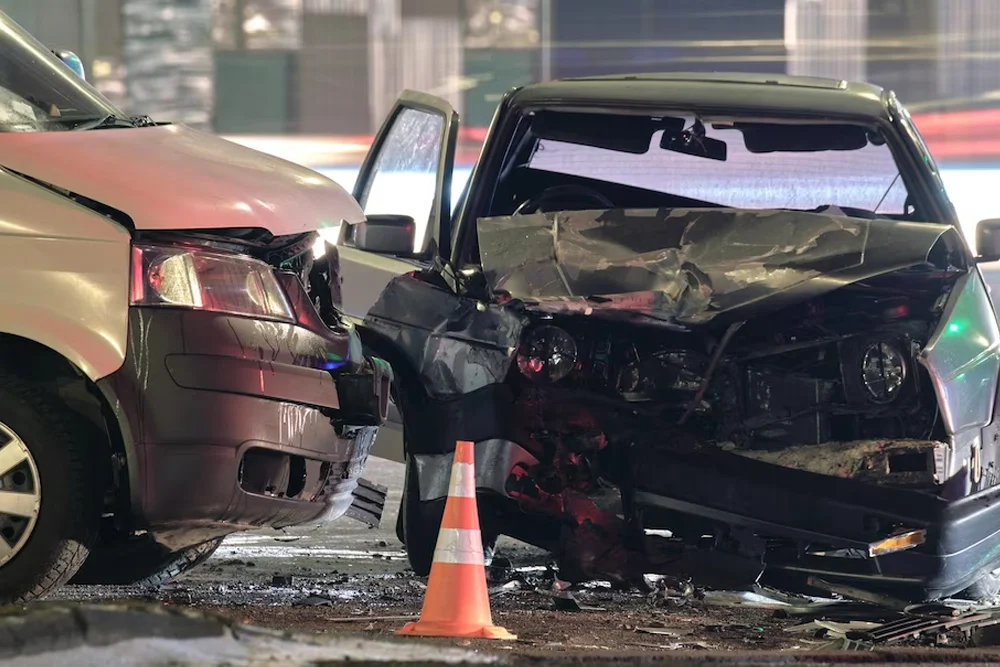
Why Choose Baumgartner Law Firm for a Houston Intersection Accident Case?
Baumgartner Law Firm is not a high-volume settlement mill. We limit the cases we accept so we can give serious injury and wrongful death cases the attention they deserve. Greg Baumgartner has represented injured Texans since 1985 and has handled serious motor vehicle cases for decades.
- More than 40 years of personal injury experience
- Houston-based representation for serious injury and wrongful death cases
- Direct attorney involvement and personal attention
- Trial-ready approach to disputed liability claims
- No fee unless we recover money for you
- Free consultation and direct review of your case facts. See our case results and client reviews.
The #1 Mistake We See After Intersection Crashes
The biggest mistake is assuming the crash report will prove everything. A police report may help, but it does not always end the fight. In many intersection cases, both drivers claim they had the green light. One driver may say the other ran a red light. A witness may be missing. The insurance company may take the part of the report that helps its driver and ignore the rest.
That is where a careful investigation matters. We do not rely on one piece of paper. We look for the proof that shows what really happened.
- Nearby business or traffic camera video
- Dashcam video from the vehicles or nearby drivers
- Witness statements taken before memories fade
- Traffic signal timing and phasing
- Vehicle damage and crush patterns
- Skid marks, debris zones, and final resting positions
- Event Data Recorder information when available
- Cell phone, distraction, or impairment evidence when it matters
If you are still near the scene or just left the hospital, read our guide on what to do after a Houston car accident before speaking with the insurance company.
Who Is at Fault in a Houston Intersection Accident?
Fault depends on the facts. In Texas, intersection cases frequently involve right-of-way rules, signal lights, stop signs, safe turning duties, and each driver’s speed and attention. Texas Transportation Code Section 545.151 addresses vehicles approaching or entering an intersection. Texas Transportation Code Section 545.152 addresses left turns and requires a driver turning left to yield to oncoming traffic that is close enough to be a hazard.
That does not mean the left-turning driver is always at fault. A speeding, distracted, drunk, or red-light-running driver can also be responsible.
Common Fault Issues We See in Intersection Cases
- One driver ran a red light or stop sign.
- A left-turning driver misjudged the speed or distance of oncoming traffic.
- A driver turned right on red without yielding to cross traffic or pedestrians.
- A driver sped up to beat a yellow light.
- A distracted driver failed to see traffic stopping ahead.
- A drunk or drugged driver reacted too late.
- A driver blocked the intersection or entered when traffic was not clear.
- Both drivers claim they had the green light.
If the insurer is blaming you, do not assume the case is over. Under the Texas proportionate responsibility law, your recovery may be reduced by your percentage of fault. If you are found more than 50 percent responsible, you may recover nothing. That is why pushing back on blame shifting is often one of the most important parts of the case.
What the Insurance Company Says vs. What It May Mean
What the insurance company may say | The legal reality you need to know |
“The police report puts some fault on you.” | The report matters, but it is not the final word. Video, witnesses, signal timing, vehicle damage, and reconstruction may tell a different story. |
“You should give a recorded statement now.” | A recorded statement can be used to lock you into answers before you know the full facts or injury picture. |
“The impact was not that bad.” | Intersection crashes can cause serious neck, back, brain, and internal injuries even when one vehicle looks less damaged than expected. |
“This is a fair first offer.” | Early offers often come before future medical care, lost income, impairment, and pain are fully known. |
“Both drivers share blame, so there is not much we can pay.” | This may be a negotiation tactic. The real question is what the evidence proves under Texas fault law. |
Common Types of Houston Intersection Accidents
Intersection collisions happen in many ways. The type of crash often points to the evidence needed to prove fault.
- T-bone crashes. A car accident lawyer in Houston can investigate side-impact crashes that often happen when one driver runs a light, fails to yield, or turns across traffic.
- Rear-end crashes at red lights. A driver who is distracted, speeding, or following too closely may hit a stopped vehicle. Learn more about rear-end crashes in Houston.
- Left-turn crashes. These cases often focus on whether the turning driver yielded and whether the oncoming driver was speeding, distracted, or ran a red light.
- Pedestrian and bicycle crashes. Drivers must watch for people crossing at marked and unmarked crossings. These cases can involve signal timing, visibility, and driver attention.
- Multi-vehicle crashes. One bad decision at a busy intersection can start a chain reaction involving several vehicles and multiple insurance companies.
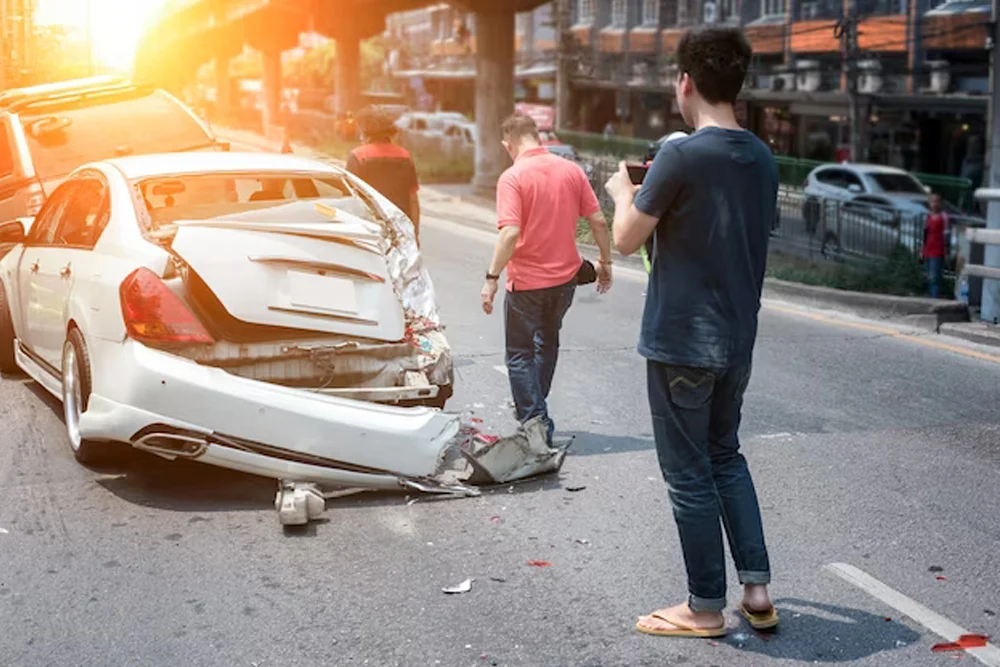
Why Houston Intersection Crashes Are So Dangerous
Intersections are dangerous because vehicles, pedestrians, cyclists, and turning traffic all meet in the same space. The Federal Highway Administration reports that roughly one-quarter of traffic fatalities and about one-half of traffic injuries in the United States are attributed to intersections. FHWA also notes that signalized intersections account for about one-third of all intersection fatalities, including many red-light-running crashes.
Texas data also shows the problem is serious. The Texas Strategic Highway Safety Plan reports that intersection crashes are the second most common crash type in Texas. It identifies common factors in fatal and serious-injury intersection crashes, including failure to yield, speeding, disregarded signals, distraction, and impairment.
In Houston, the risk is exacerbated by heavy traffic, wide roads, fast feeders, long commutes, construction, poor visibility, and drivers trying to beat the light. We often see serious intersection issues near I-45, I-10, US-59/I-69, the 610 Loop, Beltway 8, FM 1960, Westheimer, Highway 6, and busy feeder roads near shopping centers, schools, and construction zones.
TxDOT maintains a statewide crash database based on crash reports submitted by law enforcement. Public crash data can help identify patterns and dangerous locations. See TxDOT crash data analysis and statistics for more information.
Common Causes of Intersection Accidents
Most intersection crashes are not true accidents. They happen because a driver makes a poor choice or fails to follow the rules of the road.
- Running red lights or stop signs. Red-light crashes often cause severe side impacts because one vehicle enters the intersection while cross traffic is moving.
- Failing to yield. Right-of-way mistakes are common in left-turn, stop-sign, and flashing-signal cases.
- Distracted driving. A driver looking at a phone may miss a red light, a stopped car, or a pedestrian in the crosswalk.
- Speed gives drivers less time to stop and increases the force of impact. See our page on Houston speeding accident claims.
- Drunk or drugged driving. Impaired drivers may react slowly, run red lights, misjudge turns, or fail to see crossing traffic. See our page on drunk driving accident claims.
- Unsafe turns. Sudden left turns, wide right turns, and illegal U-turns can create serious car wrecks.
- Poor visibility. Buildings, trees, parked vehicles, weather, glare, and road design can all make an intersection harder to read.
These are some of the most influential factors regarding intersection accidents, but they’re far from the only ones. To fully understand intersection accidents, it is also essential to know what makes these locations so hazardous.
How We Prove Fault After a Houston Intersection Crash
A strong intersection case is built with evidence, not guesses. When we accept a serious crash case, we look for the facts that show what happened and why the other driver is responsible.
- We obtain and review the crash report.
- We look for camera footage from businesses, homes, dashcams and other sources.
- We contact witnesses before memories fade.
- We review scene photos, road layout, traffic signs, lane markings, and signal timing.
- We inspect vehicle damage, impact angles, debris, skid marks, and final resting positions.
- We preserve vehicle data when Event Data Recorder information may be useful.
- We use accident reconstruction experts when liability is seriously disputed or injuries are severe.
- We document your injuries, treatment, lost income, and future needs so the insurer cannot reduce the case to a repair bill.
This matters because insurance adjusters often look for any way to shift fault.
A fast investigation can make it much harder for the other side to blame you for the crash.
Common Injuries From Intersection Accidents
Intersection crashes can be violent because vehicles are hit at angles. A person may be thrown sideways, forward, or into the door, window, steering wheel, airbag, or seat belt.
- Neck and back injuries
- Herniated discs and nerve injuries
- Concussions and traumatic brain injuries
- Broken bones
- Shoulder, knee, and hip injuries
- Internal injuries and internal bleeding
- Facial injuries, scarring, and disfigurement
- Spinal cord injuries
- Fatal injuries that may support a Houston wrongful death claim
Do not assume you are fine because you were able to walk away. Pain, headaches, dizziness, numbness, and stiffness may appear or worsen after the adrenaline wears off.
What Compensation Can You Recover After an Intersection Accident?
The value of an intersection accident case depends on fault, injury severity, medical proof, future care, lost income, pain, impairment, and available insurance. No lawyer can honestly value your case without reviewing the facts. Depending on the case, compensation may include:
- Ambulance and emergency room bills
- Hospital care, surgery, and follow-up treatment
- Physical therapy and future medical care
- Lost wages and reduced earning capacity
- Pain and suffering
- Mental anguish
- Physical impairment
- Disfigurement or scarring
- Vehicle damage and other out-of-pocket losses
- Wrongful death damages when a loved one is killed in the crash.
What If the Other Driver Has Little or No Insurance?
Serious intersection crashes may involve more damage than the at-fault driver’s insurance can cover. We investigate all possible sources of recovery, including the at-fault driver’s policy, employer coverage if the driver was working, rideshare or commercial coverage when applicable, and your own uninsured or underinsured motorist coverage. Learn more about uninsured motorist claims in Houston.
What to Do After a Houston Intersection Accident
- Call 911 and wait for law enforcement if anyone is hurt or the crash is serious.
- Get medical care as soon as possible, even if symptoms seem mild at first.
- Take photos of the vehicles, intersection, traffic lights, lane markings, signs, skid marks, debris, and visible injuries.
- Get names and phone numbers for witnesses.
- Look for nearby businesses, homes, buses, or vehicles that may have video.
- Do not guess or accept blame at the scene.
- Do not give a recorded statement to the other driver’s insurance company before getting advice.
- Call a lawyer early if you were injured, fault is disputed, or the insurer is already pressuring you.
How Long Do You Have to File an Intersection Accident Claim in Texas?
Most Texas personal injury and wrongful death claims have a two-year filing deadline. That deadline is found in Texas Civil Practice and Remedies Code Section 16.003. Some cases may involve shorter notice periods or special facts, so do not wait to seek legal advice.
Even when the deadline seems far away, the evidence may not wait. Cameras may overwrite footage in days. Witnesses may move. Vehicles may be repaired. The earlier you act, the stronger the proof may be.
Questions to Ask Before Hiring an Intersection Accident Lawyer
Choosing a lawyer after a serious crash is an important decision. If I were in your shoes, I would ask these questions before signing anything:
- Will an attorney personally handle my case, or will I mostly deal with staff?
- How many serious car accident cases has the lawyer handled?
- Does the lawyer understand disputed intersection liability cases?
- Will the firm move quickly to preserve video and other evidence?
- Does the firm prepare cases for trial, or only for quick settlement?
- What fees and case expenses will I owe if there is no recovery?
- Can I see results or reviews from past clients?
At Baumgartner Law Firm, consultations are free. You can ask these questions directly when you schedule a free case review.
Frequently Asked Questions About Houston Intersection Accidents
Who is at fault in an intersection accident in Texas?
The at-fault driver is usually the one who violated the right of way, ran a light, failed to yield, followed too closely, made an unsafe turn, or drove distracted, impaired, or too fast for conditions. Fault depends on the evidence.
What if both drivers say they had the green light?
The case may depend on video, witnesses, signal timing, the crash report, vehicle damage, dashcam footage, and accident reconstruction. Do not assume the insurer’s version is correct.
Are left-turn drivers always at fault?
No. A left-turning driver often has a duty to yield, but the other driver may share or have all fault if they were speeding, ran a red light, were distracted, or drove unsafely.
Can I recover compensation if I was partly at fault?
Yes, if you are not more than 50 percent responsible. Your recovery may be reduced by your percentage of fault under Texas law.
What evidence helps prove an intersection accident claim?
Helpful evidence may include video, witness statements, crash reports, traffic signal timing, scene photos, vehicle damage, skid marks, debris, medical records, and expert reconstruction.
Should I talk to the insurance company after an intersection crash?
You should report the crash to your own insurer, but be careful with recorded statements to the other driver’s insurer. Adjusters may ask questions designed to shift blame or lower the value of your claim.
How much is an intersection accident claim worth?
Value depends on liability, injury severity, medical care, future treatment, lost wages, pain, impairment, and available insurance. A serious case needs a fact-specific review.
How long do I have to file a lawsuit in Texas?
Most Texas injury and wrongful death claims have a two-year deadline, but you shouldn’t wait, because important evidence can disappear much sooner.
Auto Accident Resources
Learn more from our Houston car accident lawyer about the types of crashes we handle and what to do after a wreck.
Types of Car Accident Claims
- Rear-End Accident
- Chain-Reaction Accident
- T-Bone Accident
- Head-On Collision
- Distracted Driving Accident
- Speeding Accident
- Hit and Run Accident
- Drunk Driving Accident
- Rideshare Accident
- Company Vehicle Accident
- Uninsured Motorist Claim
- Passenger Injury Claim
After a Car Accident
For a FREE Consultation Contact Us Today
"*" indicates required fields
Related Links
Our Experienced Personal Injury Lawyer Can Help!
For a Free Consultation with a Preeminent Rated Injury Lawyer
Case Results
$5,750,000.00 Truck Accident - Wrongful Death
We represented a truck driver who lost control of his rig and jackknifed across the roadway, killing two innocent victims. We obtained more money for the death of the truck driver who caused the accident than the other “truck accident lawyers” got for the families of the innocent victims killed by the truck driver in the accident.
$6,000,000.00 Daycare Injury
We represented a young child injured at a daycare center. The case was settled before trial for millions above the daycare liability policy.
Confidential Settlement Commercial Vehicle Crash - Wrongful Death
Commercial vehicle accident in which we uncovered numerous violations of the trucking regulations. The trucking company required a confidential settlement so others would not know how much they had to pay us.
Confidential Settlement Burn Injury
Our client was burned in a house fire. The insurance company denied any responsibility. But they paid our full demand after filing a lawsuit and before trial.
Confidential Settlement 18-Wheeler Accident - Wrongful Death
Wrongful death case involving an 18-wheeler. The trucking company disputed liability. Yet, the insurance companies were forced to pay us the highest damages ever for the trucking company.
Baumgartner Law Firm
Talk to a Houston Intersection Accident Lawyer Today
If you were hurt in an intersection crash in Houston, you do not have to handle the insurance company alone. Baumgartner Law Firm can review the facts, explain your options, and help protect the evidence needed to prove your claim. Call (281) 587-1111 or request a free consultation online. There is no attorney fee unless we recover money for you.
Schedule a Free Case Evaluation-
Click Here for a Case Evaluation.
(281) 587-1111
We handle all types of auto accident claims, including:
Additional Houston Car Accident Resources
testimonials
Client Reviews
Mayra T
Houston Personal Injury Victim
Mr. Greg is a great personal injury lawyer. Looking for the best help? Call Baumgartner Law Firm!
Brian Wilson
Houston Personal Injury Victim
I highly recommend this law office. Greg Baumgartner is knowledgeable, dependable, honest and truly has the client’s best interests at heart.
Callie M
Houston Personal Injury Victim
Greg, a personal Injury Lawyer at Baumgartner Law Firm represented me in my personal injury case. I am very happy with the case result. Baumgartner is a GREAT law firm with GREAT people. They get RESULTS.
Cindy S
Houston Personal Injury Victim
My experience with Baumgartner law firm was excellent. They took the time to hear my concerns and kept me informed throughout the process. They fought for the best resolution for my case. Working with Greg and Lissa gave me peace of mind in a scary and stressful situation. I highly recommend their services.
Mr. Greg is a great personal injury lawyer. Looking for the best help? Call Baumgartner Law Firm!
Mayra T
Houston Personal Injury Victim
I highly recommend this law office. Greg Baumgartner is knowledgeable, dependable, honest, and truly has the client's best interests at heart.
Brian Wilson
Houston Personal Injury Victim
Greg, a personal Injury Lawyer at Baumgartner Law Firm represented me in my personal injury case. I am very happy with the case result. Baumgartner is a GREAT law firm with GREAT people. They get RESULTS.
Callie M
Houston Personal Injury Victim
My experience with Baumgartner law firm was excellent. They took the time to hear my concerns and kept me informed throughout the process. They fought for the best resolution for my case. Working with Greg and Lissa gave me peace of mind in a scary and stressful situation. I highly recommend their services.
Cindy S
Houston Personal Injury Victim
Request a Free Injury Case Review
"*" indicates required fields