
Houston Distracted Driving Accidents: How to Prove Driver Inattention

After a crash, the other driver may say, “I just did not see you.” That does not answer why. Was the driver reading a text, looking at a navigation screen, reaching for something, or simply not paying attention?
Greg Baumgartner’s first concern in a suspected distracted-driving case is proof. A phone in the car is not enough. We need evidence showing what the driver was doing, when it happened, and how it contributed to the collision.
What counts as distracted driving?
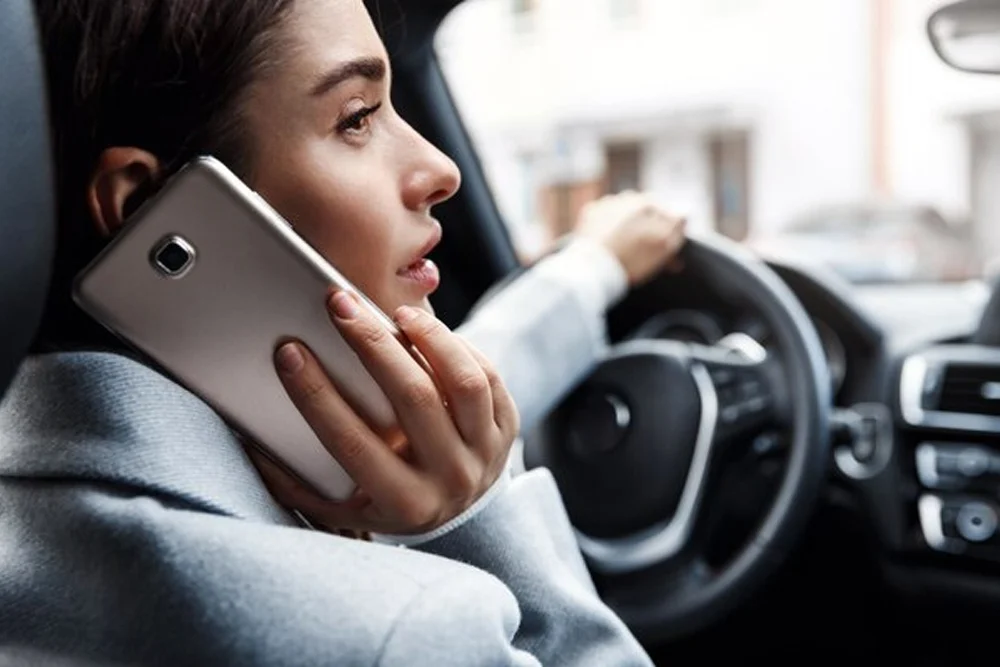
Texting is only one form of distraction. A driver may be looking at a map, selecting music, watching a screen, talking with passengers, eating, or reaching for an object. Some tasks take the driver’s eyes off the road; others take hands off the wheel or attention away from driving.
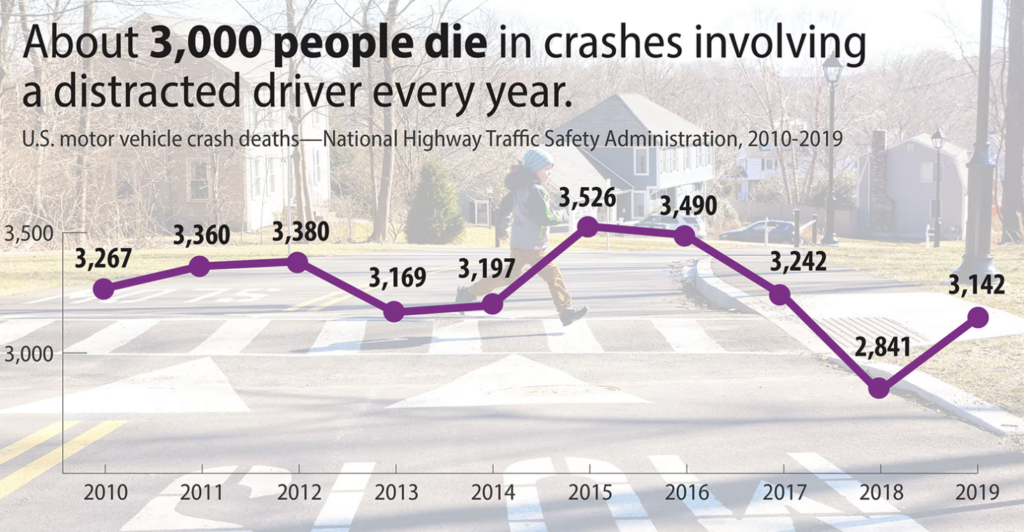
The National Highway Traffic Safety Administration’s distracted-driving guide explains the different ways attention can shift from the road.
How do we prove that distraction caused the crash?
Start with the driver’s conduct
A witness may have seen the driver looking down. Dashcam footage may show no braking before impact. The driver may have made a statement at the scene or given an account that changes later. Those details can point investigators toward the right records.
Find electronic evidence lawfully
Depending on the facts and what is legally available, phone records, app activity, messages, vehicle systems, and electronic discovery may help establish a timeline. Records do not always reveal exactly what was on a screen, and obtaining private material can require tailored discovery or legal process. It is important not to promise that every text or app action can be recovered.
Compare the timeline with physical evidence
Vehicle damage, braking evidence, road conditions, video, and witness accounts help answer the next question: did the distraction make a difference? A phone record alone does not prove that phone use caused a wreck.
For a collision caused by someone drifting into opposing traffic, our head-on crash investigation guide explains the separate evidence issues. If the crash occurred at a traffic signal, see the discussion of disputed intersection crashes.
Why fast preservation matters
Nearby video can be overwritten. Vehicles may be repaired. Witnesses may become hard to locate. The driver’s explanation may also be clearer when recorded near the time of the wreck.
Greg’s advice is to save your own records first: photos, dashcam files, the crash report number, names of witnesses, and any messages from the other driver. Do not try to access someone else’s device or accounts. Proper legal requests are the way to seek evidence held by another person or business.
What does Texas law say about phones and safe driving?
Texas restricts electronic communications while driving under specified circumstances, with exceptions. Other rules require drivers to control speed and make lane changes safely. The exact statute, current exceptions, driver conduct, and location matter. See Texas Transportation Code Chapter 545.
A ticket is not required for a civil injury claim, and a citation does not replace proof of negligence or causation. We examine what the driver did and whether it caused the harm.
When a distracted-driving crash causes serious injuries
Some collisions cause more than a short period of soreness. Brain injuries, spinal injuries, fractures, and time away from work may require medical records, specialist opinions, and evidence of future needs. Our Houston brain injury practice addresses one of the injuries that may follow a severe impact.
We do not assign a dollar value just because a driver was using a phone. Liability, medical evidence, insurance coverage, and long-term effects all matter.
Why Greg focuses on the evidence before the accusation
Baumgartner Law Firm has handled serious injury claims since 1985. Greg stays personally involved in the cases the firm accepts. We would rather show an insurer the proof of distraction than rely on an angry accusation the evidence cannot support.
For the broader process of pursuing an injury claim, see the firm’s Houston auto collision practice. If you suspect a distracted driver caused your injuries, call (281) 587-1111 for a free case review. No attorney fee is owed unless we recover money.
Frequently asked questions
Can I prove texting without seeing the other driver’s phone?
Sometimes. Video, witnesses, admissions, and records obtained through proper legal processes may help. The available proof differs in every case.
Does a police report prove the driver was distracted?
Not necessarily. A report may identify suspected distraction, but the conclusion should be checked against the underlying evidence.
What if the driver was using GPS?
Navigation use does not automatically establish negligence. The question is whether the driver failed to use reasonable care and whether that failure contributed to the crash.
Auto Accident Resources
Learn more from our Houston car accident lawyer about the types of crashes we handle and what to do after a car wreck.
Types of Car Accident Claims
- Rear-End Accident
- Chain-Reaction Accident
- T-Bone Accident
- Head-On Collision
- Intersection Accident
- Highway Accident
- Speeding Accident
- Hit and Run Accident
- Drunk Driving Accident
- Rideshare Accident
- Company Vehicle Accident
- Uninsured Motorist Claim
- Passenger Injury Claim
After a Car Accident
- What to Do After a Car Accident
- How to Get a Houston Accident Report
- Medical Care After an Accident
- When to Hire a Car Accident Lawyer
Baumgartner Law Firm
For a FREE Consultation Contact Us Today
"*" indicates required fields
Related Links
Our Experienced Personal Injury Lawyer Can Help!
For a Free Consultation with a Preeminent Rated Injury Lawyer
Case Results
$5,750,000.00 Truck Accident - Wrongful Death
We represented a truck driver who lost control of his rig and jackknifed across the roadway, killing two innocent victims. We obtained more money for the death of the truck driver who caused the accident than the other “truck accident lawyers” got for the families of the innocent victims killed by the truck driver in the accident.
$6,000,000.00 Daycare Injury
We represented a young child injured at a daycare center. The case was settled before trial for millions above the daycare liability policy.
Confidential Settlement Commercial Vehicle Crash - Wrongful Death
Commercial vehicle accident in which we uncovered numerous violations of the trucking regulations. The trucking company required a confidential settlement so others would not know how much they had to pay us.
Confidential Settlement Burn Injury
Our client was burned in a house fire. The insurance company denied any responsibility. But they paid our full demand after filing a lawsuit and before trial.
Confidential Settlement 18-Wheeler Accident - Wrongful Death
Wrongful death case involving an 18-wheeler. The trucking company disputed liability. Yet, the insurance companies were forced to pay us the highest damages ever for the trucking company.
Injured by a Distracted Driver in Houston, Call Baumgartner Law Firm for Help!
For Your Free Consultation- Call (281) 587-1111
6711 Cypress Creek Pkwy, Houston, TX, 77069
(281) 587-1111
testimonials
Client Reviews
Mayra T
Houston Personal Injury Victim
Mr. Greg is a great personal injury lawyer. Looking for the best help? Call Baumgartner Law Firm!
Brian Wilson
Houston Personal Injury Victim
I highly recommend this law office. Greg Baumgartner is knowledgeable, dependable, honest and truly has the client’s best interests at heart.
Callie M
Houston Personal Injury Victim
Greg, a personal Injury Lawyer at Baumgartner Law Firm represented me in my personal injury case. I am very happy with the case result. Baumgartner is a GREAT law firm with GREAT people. They get RESULTS.
Cindy S
Houston Personal Injury Victim
My experience with Baumgartner law firm was excellent. They took the time to hear my concerns and kept me informed throughout the process. They fought for the best resolution for my case. Working with Greg and Lissa gave me peace of mind in a scary and stressful situation. I highly recommend their services.
Mr. Greg is a great personal injury lawyer. Looking for the best help? Call Baumgartner Law Firm!
Mayra T
Houston Personal Injury Victim
I highly recommend this law office. Greg Baumgartner is knowledgeable, dependable, honest, and truly has the client's best interests at heart.
Brian Wilson
Houston Personal Injury Victim
Greg, a personal Injury Lawyer at Baumgartner Law Firm represented me in my personal injury case. I am very happy with the case result. Baumgartner is a GREAT law firm with GREAT people. They get RESULTS.
Callie M
Houston Personal Injury Victim
My experience with Baumgartner law firm was excellent. They took the time to hear my concerns and kept me informed throughout the process. They fought for the best resolution for my case. Working with Greg and Lissa gave me peace of mind in a scary and stressful situation. I highly recommend their services.
Cindy S
Houston Personal Injury Victim
Request a Free Injury Case Review
"*" indicates required fields