
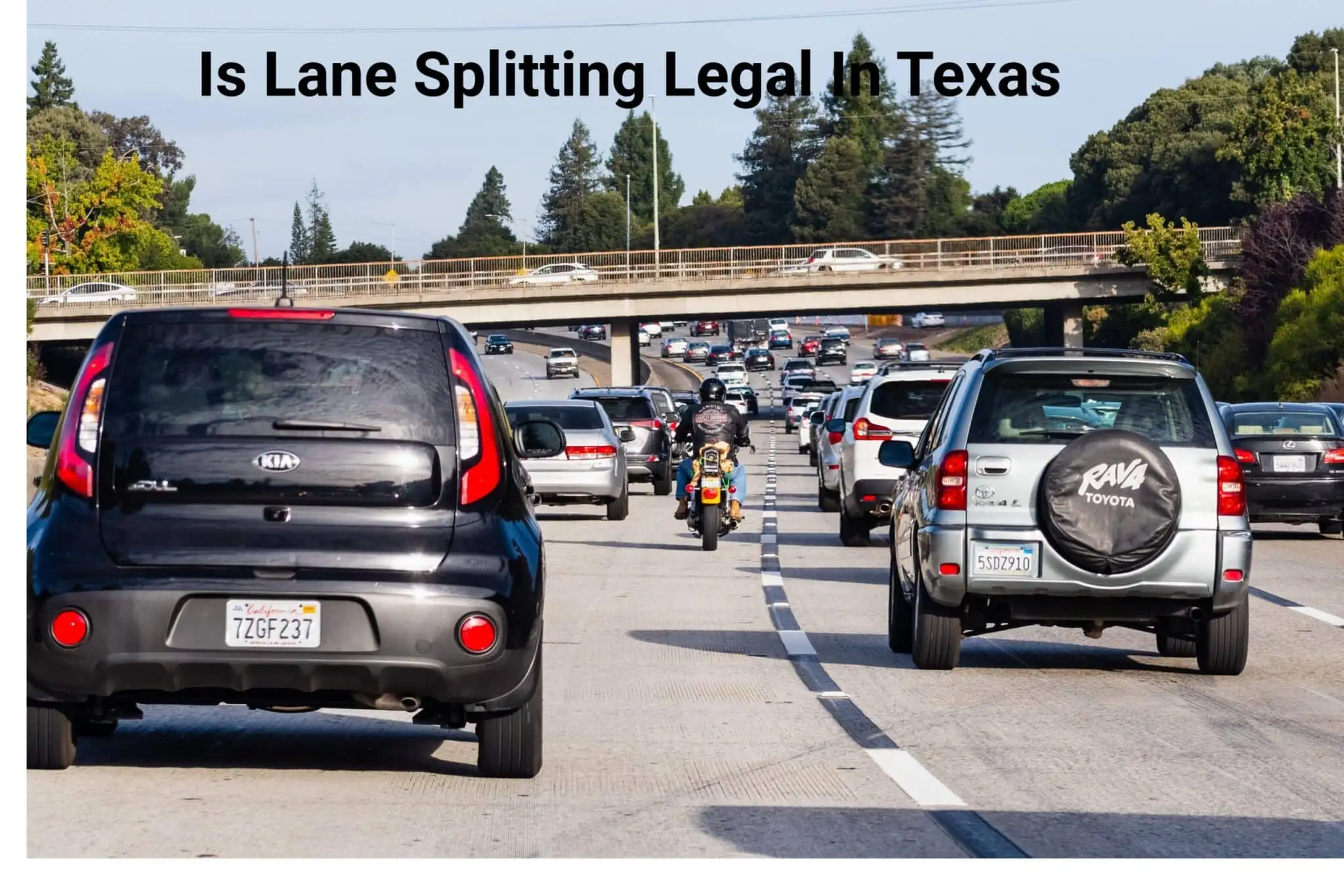
No. Lane splitting is illegal in Texas. Texas Transportation Code §545.0605 bars a motorcyclist from riding between lanes of traffic moving in the same direction or passing a vehicle while sharing the same lane. The law also does not create a general exception for moving between rows of stopped vehicles at a traffic light.
Texas made the rule clear when House Bill 4122 took effect on September 1, 2023. Riders may use a full traffic lane, and two motorcycles may ride side by side in one lane. More than two motorcycles may not ride abreast in the same lane.
The terms can be confusing, especially when riders move between cars in slow Houston traffic. This guide explains lane splitting, lane filtering, lane sharing, possible tickets, and how the issue may affect an injury claim. For a broader overview, see our guide to Texas motorcycle laws.
Texas Lane-Splitting Law at a Glance
|
Practice |
What it means |
Texas status |
|
Lane splitting |
Riding between lanes or rows of traffic moving in the same direction |
Prohibited |
|
Lane filtering |
Moving between rows of stopped or very slow traffic, often toward a red light |
No general civilian exception; riders should treat it as prohibited |
|
Lane sharing |
Two motorcycles riding side by side in one lane |
Permitted |
|
More than two abreast |
Three or more motorcycles riding side by side in one lane |
Prohibited |
What Does Texas Transportation Code §545.0605 Say?
The law gives a motorcycle the full use of a traffic lane. A car or truck may not crowd a rider or take away that space. The same statute allows two motorcycles to ride side by side in one lane.
The statute then lists three things a motorcycle operator may not do:
- Ride more than two abreast with other motorcycles in one lane.
- Ride between lanes of traffic moving in the same direction.
- Pass a motor vehicle while occupying the same lane as that vehicle.
The only express exception applies to a police officer performing official duties. The statute does not give ordinary riders an exception for traffic jams, red lights, heat, or an attempt to avoid being rear-ended.
Is Lane Filtering Legal in Texas?
Texas does not authorize lane filtering for ordinary motorcycle riders. Lane filtering usually means moving between rows of stopped vehicles, often to reach the front of a line at a red light. Although riders may use different words for filtering and splitting, Texas law does not provide a civilian filtering exception.
A proposed 2025 law, HB 2957, would have allowed limited low-speed filtering in certain conditions. It was referred to the House Transportation Committee and did not become law. That failed proposal is another reason riders should not assume filtering is allowed today.
|
Bottom line Do not treat stopped traffic as a legal safe harbor. A rider who moves between rows of vehicles may face a citation and a serious fault dispute if a crash occurs. |
Lane Splitting, Lane Filtering, and Lane Sharing
Lane splitting
Lane splitting means riding between lanes or rows of vehicles traveling in the same direction. It may happen in moving traffic, slow traffic, or a traffic backup. Texas law prohibits the practice.
Lane filtering
Lane filtering usually describes moving between stopped or nearly stopped vehicles. Some states allow it under narrow speed and road rules. Texas does not have a general civilian filtering law.
Lane sharing
Lane sharing is different. Two motorcycles may legally ride next to each other in one traffic lane. A third motorcycle may not join them abreast in that lane.
Why Is Lane Splitting Risky in Texas Traffic?
Motorcycles are smaller and harder to see than cars. The space between vehicles can disappear without warning when a driver changes lanes, opens a door, turns, or moves around debris. Large trucks create an added risk because their blind spots can hide an entire motorcycle.
The danger is not limited to the rider. A driver may react suddenly after seeing a motorcycle in an unexpected place. That reaction can cause a second crash involving other cars, riders, or pedestrians.
TxDOT motorcycle safety data shows why visibility matters. In 2025, 557 riders died and 2,468 suffered serious injuries on Texas roads. TxDOT also reports that more than half of fatal motorcycle crashes involve another vehicle. Drivers often fail to see a motorcycle or misjudge its speed and distance.
Our review of Texas motorcycle accident statistics and crash trends explains more about the dangers riders face across the state.
What Are the Penalties for Lane Splitting in Texas?
A rider may receive a traffic citation for violating the motorcycle lane-use law. The exact fine, court costs, and any related charge depend on the facts and the local court. Dangerous conduct could lead to additional allegations, especially when speed, unsafe passing, or reckless movement is involved.
The financial consequences can become much larger after a collision. An insurance company may argue that the rider broke a safety law and helped cause the crash. That argument can reduce an injury recovery, even when the other driver also made a serious mistake.
Does Lane Splitting Automatically Make a Rider Liable?
No. A traffic violation does not automatically answer every fault question. The full crash must still be investigated. A driver may share responsibility for changing lanes without looking, failing to signal, texting, speeding, driving while impaired, or turning across the rider’s path.
Texas uses proportionate responsibility. Under Chapter 33 of the Texas Civil Practice and Remedies Code, an injured person generally cannot recover damages when that person is more than 50% responsible. When the person is 50% responsible or less, the recovery is reduced by the assigned percentage of fault.
For example, assume a jury finds that a motorcyclist was 20% responsible for filtering between vehicles, while a driver was 80% responsible for changing lanes without checking a blind spot. The rider’s damages would generally be reduced by 20%. If the rider were found 51% responsible, the rider would recover nothing from that claim.
A passenger may have a different claim because the passenger did not control the motorcycle. Our guide to motorcycle passenger rights after a Texas accident explains how a passenger may seek compensation from one or more responsible drivers.
Evidence That Can Decide a Lane-Splitting Accident Claim
These cases often turn on details that disappear quickly. Useful evidence may include:
- Dashcam, helmet-camera, traffic-camera, or business surveillance video.
- Photos showing vehicle positions, lane markings, debris, and impact damage.
- Electronic vehicle data, phone records, and app records when distraction is suspected.
- Witness statements from drivers, passengers, nearby riders, or pedestrians.
- The police crash report and any citation issued at the scene.
- Medical records that connect the collision to the rider’s injuries.
Video may be erased within days or weeks. Vehicles may be repaired, sold, or destroyed. Early evidence preservation is often the difference between a strong claim and a case built on competing stories.
What to Do After a Lane-Splitting Motorcycle Crash
- Call 911 and ask for medical help. A motorcycle injury may be serious even when pain is delayed.
- Stay at the scene when it is safe. Do not argue about fault.
- Photograph the vehicles, roadway, lane lines, traffic signs, injuries, and surrounding area.
- Get the names and contact details of witnesses.
- Do not give an insurance company a recorded statement before getting legal advice.
- Preserve your motorcycle, helmet, riding gear, camera footage, and damaged property.
- Follow your medical treatment and keep records of bills, missed work, and daily problems caused by the injury.
For a more complete checklist, read what to do after a motorcycle accident in Houston.
Can You Recover Compensation After a Lane-Splitting Crash?
Possibly. A rider who was splitting or filtering lanes may still have a valid claim when another driver shares more of the fault. The value of the case depends on the strength of the liability evidence, the seriousness of the injuries, available insurance, medical expenses, lost income, future limitations, and pain and suffering.
There is no reliable “average” result for every rider. The better question is what the evidence supports in one specific case. Our discussion of the average motorcycle accident settlement in Texas explains the factors that often control claim value.
Helmet use can affect injury arguments but does not automatically decide who caused a crash. See our guide to Texas motorcycle helmet law and injury claims for a clearer explanation.
Frequently Asked Questions About Lane Splitting in Texas
Is lane splitting legal in Texas?
No. Texas Transportation Code §545.0605 prohibits a motorcycle from operating between lanes of traffic moving in the same direction or passing a vehicle while occupying the same lane.
Is lane filtering legal at a red light in Texas?
Texas does not provide a general civilian exception for lane filtering at red lights. Riders should not assume stopped traffic makes moving between rows of vehicles legal.
Can two motorcycles ride side by side in Texas?
Yes. Two motorcycles may ride abreast in one lane. More than two motorcycles may not ride side by side in the same lane.
Can a motorcycle pass a car in the same lane?
No. Section 545.0605 prohibits a motorcycle from passing a motor vehicle while occupying the same lane as the vehicle being passed.
Are police officers allowed to split lanes?
The statutory restrictions do not apply to a police officer performing official duties.
Does lane splitting prevent an injury claim?
Not automatically. It may be used as evidence of fault, but the conduct of every driver must be considered. A rider may still recover when the rider is not more than 50% responsible.
Did Texas legalize lane filtering in 2025?
No. HB 2957 proposed a limited filtering rule, but it remained in committee and did not become law.
Call a Houston Motorcycle Accident Lawyer in Houston at Baumgartner Law Firm for Help!
The motorcycle accident lawyers in Houston at Baumgartner Law Firm have successfully represented clients in motorcycle crash cases for decades. Contact our experienced team for a free consultation.
Baumgartner Law Firm
6711 Cypress Creek Pkwy, Houston, TX, 77069
Related Resources: