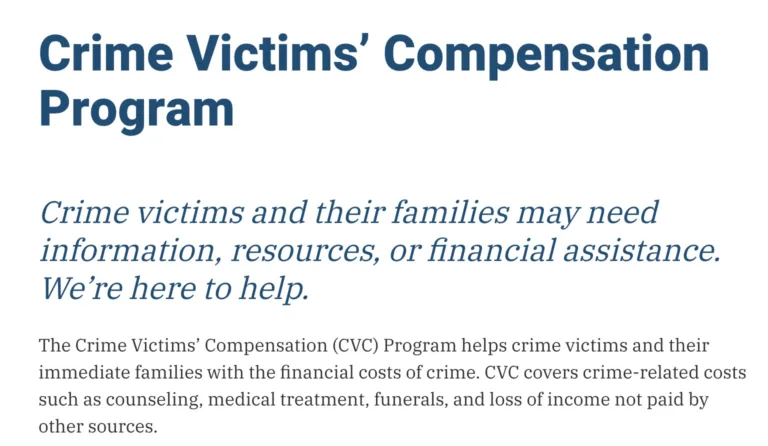
The Texas Crime Victims’ Compensation Program may help eligible victims and their families pay medical bills, counseling costs, lost wages, and other expenses resulting from a violent crime. Often called the Texas Crime Victims Fund, it is run by the Texas Attorney General. Benefits depend on the facts, covered expenses, and other available payments.
When you are hurt, the bills do not wait for the criminal case to end. Knowing where to ask for help can take one task off your family’s shoulders.
Baumgartner Law Firm does not handle Crime Victims’ Compensation applications or appeals. For help with those matters, use the official CVC application instructions or call the program at (800) 983-9933.
Who Qualifies for Texas Crime Victims’ Compensation?
People injured by qualifying crimes may receive help. Certain family members, dependents, and people who pay a victim’s crime-related bills may also qualify. An authorized adult may apply for a child, an incapacitated person, or someone who died.
Basic requirements generally include a covered crime in Texas involving a U.S. resident, a timely police report, cooperation with law enforcement, and an application filed within the allowed time. Special rules may apply to Texas residents injured abroad and to some sexual-assault services.
The program reviews the circumstances, including any conduct that could reduce or prevent an award. If you are unsure, check the official CVC eligibility requirements before ruling yourself out.
What Expenses Can the Program Cover?
Approved assistance can include medical and dental treatment, counseling, lost income, funeral costs, and loss of financial support. Certain claims may also qualify for child care, relocation, travel, or crime-scene cleanup.
The expense must relate to the crime and meet the program’s rules. A bill does not become payable simply because the application was approved. The OAG explains each category in its guide to covered costs.
CVC does not pay damages for pain and suffering or ordinary property theft, damage, or loss. That distinction matters after a crash: help with an injury does not mean the fund will repair your car.
How Much Assistance Is Available?
The general benefit limit is up to $50,000 for crimes on or after September 1, 1997. This is a ceiling for approved expenses, not a guaranteed payment. The OAG’s program overview explains the overall limit. Special catastrophic-injury benefits may also be available.
Separate limits apply to some expenses. Older crimes may fall under different rules.
Lost Wages
The program lists up to $700 per week for crimes after July 14, 2016. Payment depends on qualifying time away from work and supporting records. See the lost-wage benefit rules.
Funeral and Burial Costs
The limit is up to $6,500 for crimes after July 14, 2016. Qualifying transportation of the deceased over 50 miles one way is considered separately from that limit. Keep the funeral agreement, receipts, and insurance details. See the funeral reimbursement requirements.
Mental Health Care
The OAG lists up to 60 sessions for crimes after August 31, 2014. The limit applies per person, per claim; family counseling shares a limit. Treatment must comply with program rules, and extra sessions may require additional records. Review the mental health care benefits.
How Do You Apply?
Start with the official application instructions linked above. The online portal lets you apply, upload records, and check your claim. Paper applications are also available.
Gather the crime date, full police agency name, report number if known, contact details, and information about insurance or other benefits. Add bills and receipts you already have. You can begin without all the documents and send more later.
Be specific about what you need help paying. Keep a copy of everything you submit and respond to requests for records. A police department’s victim liaison or a trained victim advocate can help with the application.
Our practical suggestion: keep one folder for police paperwork, bills, insurance letters, and records of missed work. Add a simple note showing who paid each bill. That makes it easier to answer questions without sorting through the same paperwork again.
What Is the Application Deadline?
The usual deadline is three years from the crime. Exceptions may apply for good cause, age, or other circumstances. Reporting the crime promptly is a separate requirement. Contact CVC if you think an exception may apply.
A CVC application and a civil injury claim have different deadlines. Do not assume that applying for benefits protects your right to file a lawsuit.
Can Drunk-Driving Crash Victims Qualify?
Yes. DWI crashes and certain other vehicle-related crimes, including qualifying hit-and-run incidents, may fall within the program. Ordinary traffic accidents do not qualify just because someone was injured.
For families hurt by a drunk driver, there are separate questions: what help is available now, and who may be legally responsible for the harm? CVC addresses certain expenses. A civil claim may involve insurance coverage and other recoverable losses.
At Baumgartner Law Firm, we encourage injured people to look at both questions before treating any payment as the complete answer. Our Houston drunk-driving accident information explains the civil side. Families who lost someone can also learn about Texas wrongful-death claims.
How Do Insurance and Settlements Affect CVC Benefits?
Having insurance does not automatically disqualify you. CVC generally pays after other available sources and avoids paying twice for the same expense.
Tell the program about insurance, other benefits, and any civil claim or recovery. If CVC pays an expense and a later settlement covers it, repayment may be required. The OAG explains how other payments affect CVC benefits.
Our advice is to raise this issue before settlement funds are distributed. Give your injury lawyer the CVC claim number and payment records. A settlement amount alone does not tell you what will remain after bills and repayment obligations are addressed.
Frequently Asked Questions
Do I Need a Lawyer to Apply?
No. The application is free, and you may apply yourself. A victim advocate can help you understand the process and gather records.
Does the Offender Have to Be Convicted?
No. The OAG’s overview states that an offender need not be identified, arrested, charged, or convicted for compensation to be awarded. The claim must still satisfy the evidence and eligibility requirements.
How Long Does Approval Take?
There is no single timeline for every claim. Police verification, missing records, and expense review can affect the process. Keep your contact details up to date and check your status through the portal.
What If My Claim Is Denied or Reduced?
You may challenge the decision through the CVC appeals process. Read the decision letter immediately and follow the deadline and instructions for your stage of appeal. Include why you disagree and any supporting records.
Help With a Separate Injury Claim
Greg Baumgartner and Baumgartner Law Firm handle civil personal injury and wrongful-death matters. If a drunk driver or another responsible party caused serious harm, you can request a free consultation about your injury claim or call (281) 587-1111.
For a CVC application, payment question, or appeal, contact the program directly at (800) 983-9933, Monday through Friday, 8 a.m. to 5 p.m. Central.