Legally reviewed by Greg Baumgartner | Updated July 2026
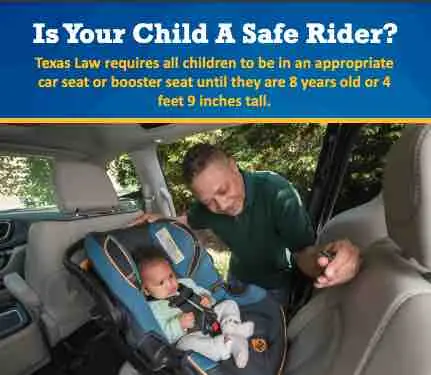
Quick answer: Texas law requires a child younger than 8 to ride in a child passenger safety seat unless the child is taller than 4 feet 9 inches. The seat must be used according to the manufacturer’s instructions. Once a child turns 8, a child seat is no longer legally required, but many children still need a booster until the adult seat belt fits correctly. |
Parents often hear several versions of the Texas car seat rule. Some focus on age. Others focus on height, weight, or the type of seat. The confusion comes from mixing the legal minimum with safety recommendations. This guide separates the two so you can understand what Texas law requires and what safety experts recommend.
I have represented injured families for more than 40 years. In child injury cases, small details matter. The correct seat, a proper installation, and a well-fitted harness can make a major difference in a crash. The goal is not just to avoid a ticket. It is to give a child the best protection possible.
Texas Car Seat Law at a Glance
Question | Texas Rule or Safety Guidance |
Who must use a child safety seat? | A child younger than 8, unless the child is taller than 4 feet 9 inches. |
What is the fine? | A misdemeanor fine of $25 to $250, plus possible court costs. |
How must the seat be used? | According to the child-seat manufacturer’s instructions. |
When can a child use only a seat belt? | At age 8 under Texas law, or earlier if taller than 4 feet 9 inches. Safety experts recommend waiting until the belt fits correctly. |
Where should a child ride? | Texas law does not set a general front-seat age. Safety guidance recommends the back seat through age 12. |
What Does Texas Law Actually Require?
The Texas child passenger safety statute makes it an offense to drive a passenger vehicle while transporting a child younger than 8 who is not secured in an appropriate child passenger safety seat. The age rule has one exception: a child who is taller than 4 feet 9 inches is not required to use a child safety seat, even if the child is younger than 8.
The law also requires the seat to be used according to the manufacturer’s instructions. That point is important. The instructions set limits for age, height, weight, installation, harness position, and when a child may move to the next type of seat. The Texas Department of State Health Services summary of the law gives the same basic rule.
Texas law does not create a simple age schedule for rear-facing, forward-facing, and booster seats. Those stages come from safety guidance and the instructions for the specific seat. Parents should follow both the law and the seat manufacturer’s limits.
Texas Law Versus Best Safety Practice
A child may reach the legal minimum before an adult seat belt fits safely. For example, Texas allows a child to stop using a booster on the child’s eighth birthday. But if the lap belt rides over the stomach or the shoulder belt crosses the neck, the child is not getting the protection the belt was designed to provide.
The safest approach is to keep a child in each stage until the child reaches the maximum height or weight allowed by the seat manufacturer. The National Highway Traffic Safety Administration’s car seat guidance recommends choosing a seat based on the child’s age and size, making sure it fits the vehicle, and using it correctly on every trip.
Car Seat Stages by Age and Size
Child’s Stage | Recommended Restraint | When to Move Forward |
Infant or young toddler | Rear-facing car seat | When the child reaches the seat’s rear-facing height or weight limit. |
After rear-facing is outgrown | Forward-facing seat with a harness and top tether | When the child reaches the seat’s harness height or weight limit. |
After the harnessed seat is outgrown | Belt-positioning booster seat | When the vehicle lap-and-shoulder belt fits correctly without a booster. |
Older child | Vehicle lap-and-shoulder belt | Only after the child passes the five-step belt-fit test. |
Rear-Facing Car Seats
A rear-facing seat supports a young child’s head, neck, and spine by spreading crash forces across the back of the seat. Keep a child rear-facing as long as the seat allows. Do not turn the seat forward simply because the child turns 1 or 2. The correct time depends on the seat’s rear-facing limits.
Never place a rear-facing car seat in front of an active passenger airbag. A deploying airbag can strike the seat with extreme force. For additional everyday precautions, see our safety tips for driving with a baby.
Forward-Facing Seats With a Harness and Tether
After a child outgrows the rear-facing limits, use a forward-facing seat with a five-point harness. Use the top tether when the vehicle and seat instructions allow it. The tether limits forward head movement in a crash and is an important part of a forward-facing installation.
Keep the child in the harness until the child reaches the seat’s height or weight limit. Moving to a booster too early can be unsafe because a booster depends on the child remaining properly seated for the entire trip.
Booster Seats
A booster raises and positions the child so the vehicle’s lap-and-shoulder belt fits across the stronger parts of the body. The lap belt should lie low across the upper thighs, not the stomach. The shoulder belt should cross the center of the shoulder and chest, not the neck or face.
Texas law no longer requires a booster once a child turns 8. However, many children between ages 8 and 12 still need one. The safer decision is based on belt fit, not a birthday alone.
When Can a Child Use a Regular Seat Belt?
Use the following five-step test. The Texas Department of Public Safety child occupant FAQ recommends checking whether the child can:
- Sit all the way back against the vehicle seat.
- Bend the knees comfortably at the edge of the seat.
- Keep the shoulder belt across the center of the shoulder and chest.
- Keep the lap belt low across the upper thighs.
- Stay in that position for the entire trip.
If the answer to any question is no, the child probably still needs a booster seat. Also review the broader Texas seat belt requirements for older children and adults.
When Can a Child Sit in the Front Seat in Texas?
Texas law does not set a single age at which a child may sit in the front seat. Still, the back seat is safer for children. Safety agencies recommend that children ride properly restrained in the back seat through age 12.
The vehicle owner’s manual and child-seat instructions also matter. Some vehicles or seats prohibit installation in certain positions. A rear-facing seat must not be placed in front of an active airbag.
How to Install and Use a Car Seat Correctly
A good car seat cannot protect a child if it is loose, installed in the wrong position, or used with an incorrect harness fit. The TxDOT child passenger safety program reports that car-seat misuse is common and offers practical help for parents.
- Read both manuals. Use the car-seat instructions and the vehicle owner’s manual together.
- Use the seat belt or lower anchors as directed. Do not use both unless the manufacturer specifically allows it.
- Check movement at the belt path. The installed seat should not move more than one inch from side to side or front to back when tested at the belt path.
- Use the top tether for a forward-facing seat. Follow the seat and vehicle instructions.
- Keep the harness snug. You should not be able to pinch extra webbing at the child’s shoulder.
- Place the chest clip correctly. It should generally be at armpit level.
- Avoid unapproved add-ons. Extra padding, mats, mirrors, or strap covers can interfere with performance if the manufacturer does not approve them.
- Register the seat. Registration allows the manufacturer to contact you about recalls and safety notices.
Get a Free Car Seat Inspection in Texas
Even careful parents can miss an installation detail. Certified technicians can check the seat, explain the harness, and show you how to reinstall it yourself. Use Save Me With a Seat to find a free TxDOT car-seat check near you. You can also use the NHTSA Car Seat Finder to compare seat types and locate inspection help.
Do Texas Car Seat Laws Apply to Taxis, Uber, and Lyft?
Texas Transportation Code Section 545.412 includes an exception for a person operating a vehicle that transports passengers for hire. The Texas DPS FAQ lists taxis, limousines, hired shuttles, and public transit buses as examples. The statute does not specifically name Uber or Lyft.
Parents should not treat a possible legal exception as a safety rule. Bring the correct car seat, allow enough time to install it, and do not begin the trip unless the child can ride safely. A rideshare driver may also refuse a trip when a required or appropriate seat is not available.
Fines, Defenses, and Limited Exceptions
A violation of the Texas child safety seat law is a misdemeanor punishable by a fine of $25 to $250. Court costs may also apply.
The statute provides a defense when the driver was operating the vehicle in an emergency or for a law-enforcement purpose. It also does not apply to a person operating a vehicle transporting passengers for hire or transporting a child when all seating positions equipped with safety belts or child-restraint systems are occupied.
Texas also provides a narrow defense for some first-time situations when the driver was not cited for another offense, the vehicle was not involved in a collision, no child seat was in the vehicle, and the driver later obtained an appropriate seat. A court decides whether the proof is sufficient. Do not assume that buying a seat later will automatically erase a ticket.
Common Car Seat Mistakes to Avoid
- Moving a child to the next stage before the child reaches the current seat’s limits.
- Using a loose installation or a loose harness.
- Placing the chest clip too low.
- Using a booster with only a lap belt when the booster requires a lap-and-shoulder belt.
- Putting a rear-facing seat in front of an active airbag.
- Using a seat that is expired, recalled, missing labels, or missing its instruction manual.
- Using a second-hand seat without knowing its full history.
- Using lower anchors after the child and seat exceed the allowed anchor weight limit.
- Allowing a child to put the shoulder belt behind the back or under the arm.
Should a Car Seat Be Replaced After an Accident?
After a moderate or severe crash, replace the car seat. The NHTSA guidance on car seats after a crash says a seat does not automatically need replacement after a minor crash, but all five of its minor-crash conditions must be met:
- The vehicle could be driven away from the scene.
- The door nearest the car seat was not damaged.
- No occupant was injured.
- The airbags did not deploy.
- The car seat has no visible damage.
Always follow the car-seat manufacturer’s instructions, even when the crash appears minor. Some manufacturers require replacement after any collision.
What to Do After a Crash With a Child in the Car
A child may not be able to explain pain, dizziness, confusion, or fear. Take any possible injury seriously. The following steps can protect both the child’s health and important evidence:
- Call 911 and request medical help when anyone may be injured.
- Have the child evaluated promptly, especially after a hard impact or any change in behavior.
- Photograph the car seat before removing it, including the installation, harness position, labels, and visible damage.
- Save the seat, base, manual, receipt, packaging, and registration information. Do not throw the seat away until the claim is investigated.
- Photograph the vehicles, scene, damage, and the seating position where the child was riding.
- Keep medical records, bills, school absence records, and notes about sleep, mood, pain, or activity changes.
- Notify the appropriate insurance companies, but be cautious about recorded statements and quick releases.
Our detailed guide on what to do after a Houston car accident explains how to preserve evidence and avoid common insurance mistakes.
How Car Seat Use May Affect a Child Injury Claim
When a child is injured, an insurance company may examine whether the child was properly restrained and whether restraint use affected the injuries. That does not automatically erase a claim against the driver who caused the crash. It is a fact-specific issue that may require medical, engineering, and legal analysis.
In a serious case, preserve the car seat and installation evidence. Do not let an insurer, tow yard, or salvage company dispose of the seat before it can be inspected. A lawyer may need to evaluate the seat model, crash history, installation method, vehicle damage, and medical evidence.
Texas allows a parent or legal representative to pursue a claim for an injured minor. Learn more about filing a personal injury claim for a child in Texas and how Texas law may address pain and suffering for a child injured in a car accident.
Frequently Asked Questions About Texas Car Seat Laws
What is the Texas car seat law in 2026?
A child younger than 8 must be secured in a child passenger safety seat unless the child is taller than 4 feet 9 inches. The seat must be used according to the manufacturer’s instructions.
Does a 7-year-old need a booster seat in Texas?
Usually, yes. A 7-year-old must use an appropriate child safety seat unless the child is taller than 4 feet 9 inches. For most children that means a booster after the forward-facing harness is outgrown.
Does an 8-year-old need a booster seat in Texas?
Texas law does not require a child seat after the child turns 8. However, an 8-year-old should continue using a booster until the vehicle belt fits correctly.
Does Texas require rear-facing until age 2?
The statute does not state a simple rear-facing-until-2 rule. It requires an appropriate seat used according to the manufacturer’s instructions. Safety experts recommend rear-facing until the child reaches the seat’s rear-facing height or weight limit.
What is the height requirement for a booster seat in Texas?
Texas law uses 4 feet 9 inches as the height exception for children younger than 8. Safety guidance also uses proper belt fit, because some children still need a booster after age 8.
Can a child sit in the front seat in Texas?
Texas law does not set a general front-seat age. The back seat is safer, and safety guidance recommends keeping children in the back seat through age 12.
What is the fine for not using a child car seat in Texas?
The fine is $25 to $250. Court costs may also apply.
Can I use a second-hand car seat?
Only when you know its full history, it has not been in a disqualifying crash, it is not expired or recalled, all labels and parts are present, and you have the instructions.
Are expired car seats illegal in Texas?
Texas does not create a separate ticket solely for an expired seat. However, the law requires the seat to be used according to manufacturer instructions, and an expired seat may no longer meet those instructions.
Should I replace a car seat after a crash?
Replace it after a moderate or severe crash. After a minor crash, review the manufacturer’s instructions and NHTSA’s five minor-crash conditions before deciding whether it can be reused.
Talk With a Houston Car Accident Lawyer After a Child Injury
A crash involving a child is frightening. Parents often have questions about medical care, the car seat, insurance, and what evidence needs to be saved. You do not have to sort through those issues alone.
Greg Baumgartner has represented seriously injured Texans and their families since 1985. Baumgartner Law Firm limits the cases it accepts so each client receives personal attention. If your child was injured because another driver was careless, speak with an experienced Houston car accident lawyer about the next steps.
Call Baumgartner Law Firm at (281) 587-1111 or request a free consultation. There is no attorney fee unless the firm recovers money for you.