
Who Can File a Wrongful Death Claim in Texas?
Last reviewed by Greg Baumgartner – Houston personal injury lawyer on August 14, 2026.
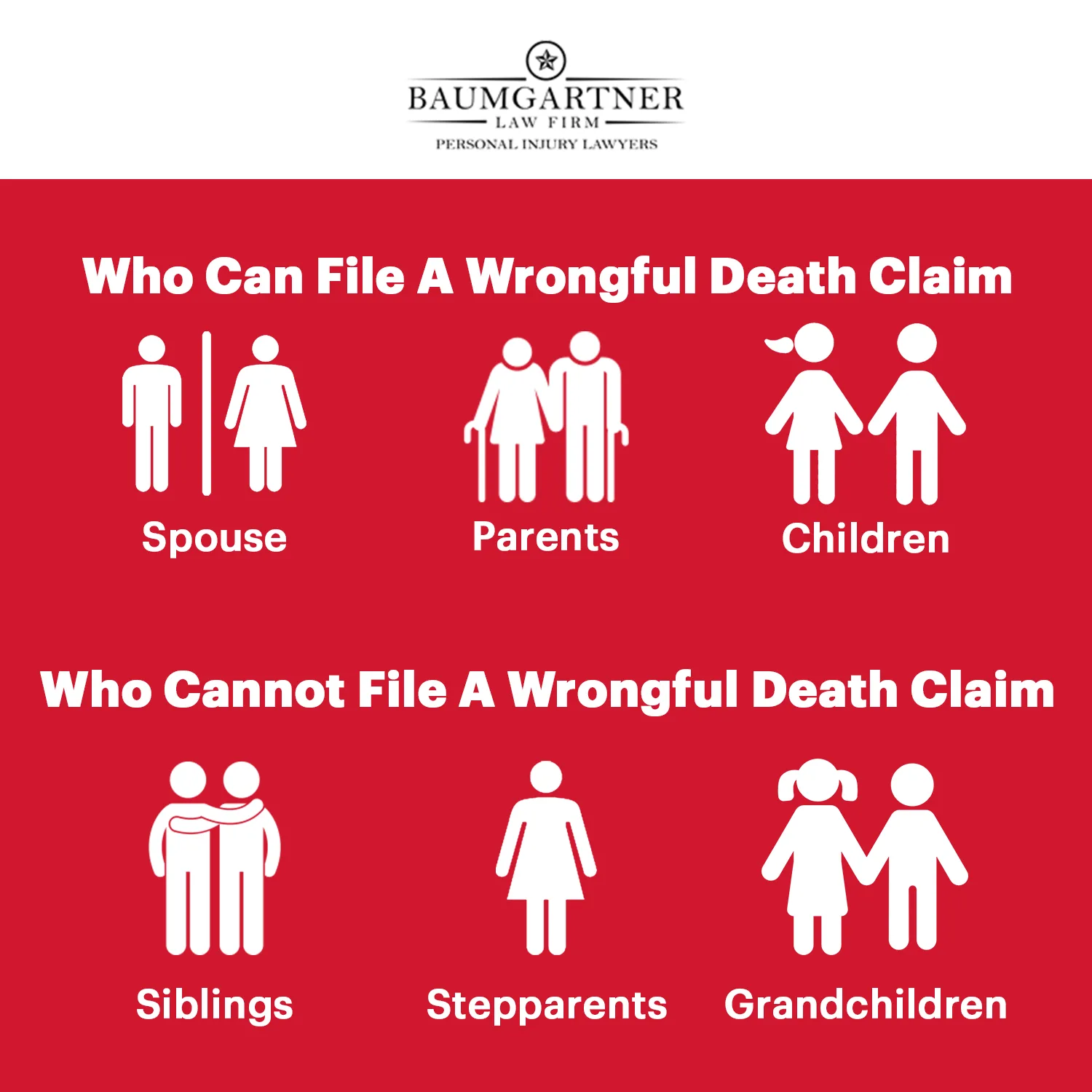
Texas law limits wrongful death claims to a small group of family members. Under Texas Civil Practice and Remedies Code § 71.004, the claim is for the exclusive benefit of the deceased person’s surviving spouse, children, and parents. Adult children and parents of adult children can qualify. Siblings, grandparents, and most step-relatives do not.
That rule sounds simple until a family has a common-law marriage, adopted children, stepchildren, estranged relatives, or several people who may have claims. Those details should be sorted out early. A person can be deeply affected by a death and still fall outside the group Texas law allows to recover wrongful death damages.
Once eligibility is clear, learn how we represent Houston families after a fatal injury and investigate the people or companies that may be responsible.
Texas Wrongful Death Beneficiaries: Quick Answers
Question | Direct answer |
Who can recover? | The surviving spouse, children, and parents of the deceased. |
Can adult children file? | Yes. Texas law does not end a child’s status because the child is an adult. |
Can parents file for an adult child? | Yes. A parent may qualify even when the son or daughter who died was an adult. |
Can siblings or grandparents file? | Generally no. They are not listed as statutory wrongful death beneficiaries. |
Can a common-law spouse qualify? | Yes, if a valid Texas informal marriage can be established. |
Can one beneficiary file for everyone? | Yes. One or more eligible beneficiaries may bring the action for the benefit of all. |
What happens after three months? | If no eligible beneficiary files, the executor or administrator generally must bring the action unless all beneficiaries ask that it not be filed. |

Who Counts as a Surviving Spouse?
A person who was legally married to the deceased at the time of death is generally a surviving spouse. Living apart does not, by itself, end a marriage. A former spouse whose divorce was final before the death is different because the marriage had already ended.
Texas also recognizes informal marriage, sometimes called common-law marriage. Texas Family Code § 2.401 explains how an informal marriage may be proved. When marital status is disputed after a death, proof of the relationship can become an important issue in the wrongful death case.
In that situation, I look for real-world proof early: how the couple described their relationship, how they handled important records, and what family members, friends, and others understood about the marriage. The question is not whether the relationship felt serious. The legal question is whether a marriage existed under Texas law.
Can Children File a Texas Wrongful Death Claim?
Yes. A deceased person’s children may be wrongful death beneficiaries. This can include minor children, adult children, biological children, and legally adopted children. Texas does not cut off a child’s right simply because the child is grown and living independently.
A stepchild is different. A close stepchild relationship, standing alone, generally does not create wrongful death beneficiary status. A legal adoption can change that result because it creates a legal parent-child relationship.
Eligibility and case value are separate questions. An adult child who had a close daily relationship with a parent may have a very different loss from an adult child who had little contact. Both questions matter, but they should not be confused.
Can Parents File for the Wrongful Death of an Adult Child?
Yes. Texas law allows parents to be wrongful death beneficiaries even when the son or daughter who died was an adult. Biological and legally adoptive parents may qualify.
This surprises some families because they assume a parent’s claim ends when a child turns 18. It does not. The nature of the relationship may affect the damages that can be proved, but adulthood does not by itself eliminate the parent’s status as a beneficiary.
Who Usually Cannot File a Texas Wrongful Death Claim?
Texas does not base beneficiary status on who was emotionally closest to the person who died. The statute names specific family relationships. That means some people who suffer a profound loss still may not have their own wrongful death claim.
Relationship | General rule |
Sibling | Generally not a wrongful death beneficiary. |
Grandparent | Generally not a beneficiary unless a legal parent-child relationship exists through adoption. |
Stepchild or stepparent | Generally not a beneficiary based only on the step-relationship; legal adoption can change the analysis. |
Fiancé or unmarried partner | Not a beneficiary based only on the relationship. A valid informal marriage may change the result. |
Aunt, uncle, cousin, or other relative | Not included in the statutory beneficiary group. |
This can feel harsh in families where a sibling, grandparent, or stepparent was the person who provided daily care or support. But a wrongful death claim is created by statute, and the court must start with the relationships Texas law recognizes.
Can One Family Member File the Wrongful Death Case?
Yes. Section 71.004 allows the surviving spouse, children, and parents to bring the action, and it also allows one or more of them to file for the benefit of all eligible beneficiaries. That does not mean the other beneficiaries should be ignored. The family should identify everyone who may qualify and address their interests early.
This is especially important when the deceased had children from different relationships, when parents are divorced, or when family members live in different states. Getting the beneficiary list right at the beginning is usually easier than trying to repair it after settlement discussions have started.
What Is the Three-Month Executor Rule?
Texas law has a backstop when no eligible beneficiary starts the wrongful death action. If none of the surviving spouse, children, or parents files within three calendar months after the death, the executor or administrator generally must bring and prosecute the case unless all eligible beneficiaries ask that it not be filed.
The executor or administrator does not become a new wrongful death beneficiary. The representative is acting under the statute for the benefit of the people who are entitled to the wrongful death claim. Families also should not treat the three-month rule as a reason to wait. Evidence can disappear long before any filing deadline becomes urgent.
Does a Will Decide Who Gets a Wrongful Death Claim?
No. A will does not decide who qualifies as a Texas wrongful death beneficiary. Chapter 71 does. Naming a sibling, grandchild, or friend in a will does not give that person a wrongful death claim if the person is not otherwise an eligible spouse, child, or parent.
This is one reason families sometimes confuse wrongful death claims with survival claims. Wrongful death damages compensate the statutory beneficiaries for their own losses. A survival claim belongs to the estate and follows different rules. The two claims can arise from the same death, but they are not the same claim.
Do All Beneficiaries Receive the Same Amount?
Not automatically. Each eligible beneficiary has an individual loss. A spouse, child, and parent can all qualify, but the effect of the death on each person may be very different. The relationship, financial support, care, guidance, companionship, and mental anguish must be evaluated person by person.
That is why identifying the beneficiaries is only the first step. The next question is what each person actually lost and what evidence can show it. Settlement allocation is a separate issue and should not be reduced to a simple head count.
Greg Baumgartner: Treat the Family as People, Not a List of Names
One mistake I try to avoid is treating beneficiaries as names on a family tree. The statute tells us who may have a claim. It does not tell the story of the relationship.
When I represent a family after a fatal accident, I want to know what daily life looked like before the death. Who called whom every morning? Who helped with the children? Who handled repairs, bills, school decisions, or medical appointments? Who was the person everyone turned to for advice? Those facts help explain the loss in a way a label such as “spouse” or “adult child” never can.
The goal is not to exaggerate grief. It is to present the family honestly and make sure the legal claim reflects the people who were actually affected.
FAQs About Texas Wrongful Death Beneficiaries
Can an adult child file for a parent’s wrongful death in Texas?
Yes. Texas does not impose an age cutoff that prevents an adult child from qualifying as a wrongful death beneficiary for a deceased parent.
Can parents sue for the wrongful death of an adult child?
Yes. A parent can qualify even when the child who died was an adult. The facts of the relationship may affect damages, but not the basic rule that parents are included in the statute.
Can a sibling file a wrongful death lawsuit in Texas?
Generally no. Brothers and sisters are not included in the statutory list of wrongful death beneficiaries.
Can a common-law spouse file a wrongful death claim?
Potentially yes. A person who can establish a valid Texas informal marriage may qualify as a surviving spouse. If the marriage is disputed, proof of marital status may become an important issue in the case.
Can a stepchild file a wrongful death claim?
A stepchild generally does not qualify based only on the step-relationship. A legal adoption may create the parent-child status needed to qualify.
Can one beneficiary file without the others?
Texas law allows one or more eligible beneficiaries to bring the action on behalf of all. In practice, everyone who may qualify should be identified, and their interests addressed early.
What if nobody files a wrongful death case within three months?
If no eligible beneficiary starts the action within three calendar months, the executor or administrator generally must bring the case unless all eligible beneficiaries ask that it not be filed. The general filing deadline still matters, so families should not wait simply because this three-month provision exists.
What if the person who died had no spouse, children, or living parents?
If no statutory wrongful death beneficiary survives, other relatives do not automatically take their place. The estate may still have a separate survival claim for losses that belonged to the deceased person before death.
Does being named in a will make someone a wrongful death beneficiary?
No. A will controls estate matters, but it does not expand the beneficiary group created by the Texas Wrongful Death Act.
Related Resources
- Houston Wrongful Death Lawyer – Overview of Texas wrongful death claims, damages, investigation, and how Baumgartner Law Firm handles fatal-accident cases.
- How to File a Wrongful Death Lawsuit in Texas – What should happen before filing, who may bring the case, and how the lawsuit process begins.
- How to Prove Wrongful Death in Texas – Evidence used to prove fault, causation, and the family’s losses.
- Texas Wrongful Death Statute of Limitations – The general two-year deadline and important timing issues.
- How Are Wrongful Death Settlements Divided in Texas? – How individual beneficiary losses can affect the division of a recovery.
- Survival Actions in Wrongful Death Cases – How an estate claim differs from the family’s wrongful death claims.
Talk Directly With Greg Baumgartner
If you lost a spouse, child, or parent because of another person’s carelessness or a company’s unsafe conduct, I can help you understand who has a claim and what should be done next. I personally handle the wrongful death matters that Baumgartner Law Firm accepts.
Call (281) 587-1111 for a free, confidential consultation. There is no attorney fee unless we recover compensation for your family.
For a FREE Consultation Contact Us Today
"*" indicates required fields
Our Experienced Houston Personal Injury Lawyer Can Help!
For a Free Consultation with a Preeminent Rated Injury Lawyer
Case Results
$5,750,000.00 Truck Accident - Wrongful Death
We represented a truck driver who lost control of his rig and jackknifed across the roadway, killing two innocent victims. We obtained more money for the death of the truck driver who caused the accident than the other “truck accident lawyers” got for the families of the innocent victims killed by the truck driver in the accident.
$6,000,000.00 Daycare Injury
We represented a young child injured at a daycare center. The case was settled before trial for millions above the daycare liability policy.
Confidential Settlement Commercial Vehicle Crash - Wrongful Death
Commercial vehicle accident in which we uncovered numerous violations of the trucking regulations. The trucking company required a confidential settlement so others would not know how much they had to pay us.
Confidential Settlement Burn Injury
Our client was burned in a house fire. The insurance company denied any responsibility. But they paid our full demand after filing a lawsuit and before trial.
Confidential Settlement 18-Wheeler Accident - Wrongful Death
Wrongful death case involving an 18-wheeler. The trucking company disputed liability. Yet, the insurance companies were forced to pay us the highest damages ever for the trucking company.
About Our Law Firm in Houston
Houston personal injury attorney Greg Baumgartner heads the Baumgartner Law Firm.
Our firm was established in 1985 and has helped thousands of injury victims get maximum compensation for their cases. If you have been injured in an accident in Houston, TX, contact us for a free, no-obligation consultation. (281) 587-1111.
Baumgartner Law Firm limits its law practice to serious personal injury cases and fatal accident cases. Our legal team has won maximum compensation for thousands of accident victims and recovered millions of dollars for real people like you.
testimonials
Client Reviews
Mayra T
Houston Personal Injury Victim
Mr. Greg is a great personal injury lawyer. Looking for the best help? Call Baumgartner Law Firm!
Brian Wilson
Houston Personal Injury Victim
I highly recommend this law office. Greg Baumgartner is knowledgeable, dependable, honest and truly has the client’s best interests at heart.
Callie M
Houston Personal Injury Victim
Greg, a personal Injury Lawyer at Baumgartner Law Firm represented me in my personal injury case. I am very happy with the case result. Baumgartner is a GREAT law firm with GREAT people. They get RESULTS.
Cindy S
Houston Personal Injury Victim
My experience with Baumgartner law firm was excellent. They took the time to hear my concerns and kept me informed throughout the process. They fought for the best resolution for my case. Working with Greg and Lissa gave me peace of mind in a scary and stressful situation. I highly recommend their services.
Mr. Greg is a great personal injury lawyer. Looking for the best help? Call Baumgartner Law Firm!
Mayra T
Houston Personal Injury Victim
I highly recommend this law office. Greg Baumgartner is knowledgeable, dependable, honest, and truly has the client's best interests at heart.
Brian Wilson
Houston Personal Injury Victim
Greg, a personal Injury Lawyer at Baumgartner Law Firm represented me in my personal injury case. I am very happy with the case result. Baumgartner is a GREAT law firm with GREAT people. They get RESULTS.
Callie M
Houston Personal Injury Victim
My experience with Baumgartner law firm was excellent. They took the time to hear my concerns and kept me informed throughout the process. They fought for the best resolution for my case. Working with Greg and Lissa gave me peace of mind in a scary and stressful situation. I highly recommend their services.
Cindy S
Houston Personal Injury Victim
NEED HELP? HAVE QUESTIONS?
"*" indicates required fields