

Protect your health first. If your condition allows, the following steps can also protect the evidence needed for an injury claim.
- Call 911 and get medical care. Ask for police and emergency medical help. Some brain, internal, and orthopedic injuries are not immediately obvious.
- Document the scene if it is safe. Photograph the vehicle, crosswalk, traffic signals, skid marks, debris, lighting, sight obstructions, and your injuries.
- Identify witnesses. Get names and contact information. A neutral witness may be important if the driver later gives a different account.
- Keep physical and electronic evidence. Save your clothing, shoes, photographs, medical paperwork, receipts, and communications with insurers.
- Be careful with insurance calls. You can report the collision, but you do not have to give a recorded statement to the other driver’s adjuster before getting legal advice.
- Move quickly to preserve video. Nearby businesses, homes, apartment properties, buses, and vehicles may have recordings that are overwritten within days or weeks.
Who May Be Responsible for a Pedestrian Crash
The driver is often the first person investigated, but serious pedestrian cases may involve more than one responsible party. The correct answer depends on where the crash happened, why the driver was there, and what evidence is available.
- A careless driver may be responsible for speeding, distraction, impairment, unsafe turning, backing without looking, or failing to yield.
- An employer or commercial vehicle company may be responsible when the driver was working or when company practices contributed to the crash.
- A rideshare or delivery company’s insurance may apply depending on the driver’s app status and activity when the collision occurred.
- A property owner or contractor may share responsibility when an unsafe parking lot, a blocked sight line, a missing warning, or a construction condition contributed to the collision.
For a closer explanation of proof, see negligence in Texas pedestrian accident cases. A collision involving an ordinary passenger vehicle may also raise the same insurance and evidence issues discussed in our guidance on legal help after a Houston car crash.
How Texas Pedestrian Right-of-Way Laws Affect Fault
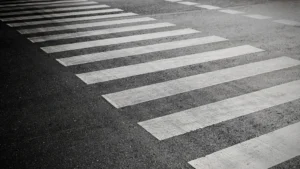 Pedestrians do not have the right of way in every situation, and crossing outside a marked crosswalk does not automatically end a claim. Texas Transportation Code Chapter 552 addresses pedestrian signals, marked and unmarked crosswalks, crossing outside a crosswalk, sidewalks, and duties around roadways.
For example, a driver generally must yield when the law gives a pedestrian the right of way in a crosswalk. A pedestrian crossing outside a crosswalk may have a duty to yield to traffic. Even then, the driver must still keep a proper lookout and use reasonable care under the circumstances. The full facts matter, including speed, visibility, lighting, traffic signals, driver attention, and the pedestrian’s location at the time of impact.
Texas also applies proportionate responsibility. Under Chapter 33 of the Texas Civil Practice and Remedies Code, a person who is 51 percent or more responsible generally cannot recover damages. A person who is 50 percent or less at fault may recover, but the award is reduced by that percentage. Our guide to Texas pedestrian right of way laws explains the crosswalk rules in more detail.
Greg’s practical advice Do not assume that the phrase “outside the crosswalk” decides the case. I want to know when the driver first saw the pedestrian, how fast the vehicle was moving, whether the driver was turning or distracted, and whether the collision could have been avoided.
What I Investigate First in a Serious Pedestrian Case
When I review a serious pedestrian case, I do not start with a demand letter. I start with evidence that may be lost. The goal is to understand the collision before memories fade, video is erased, or the vehicle is repaired.
- Surveillance, doorbell, dashboard, traffic, bus, and vehicle camera recordings
- Vehicle event data, braking information, phone records, app records, dispatch data, and navigation history when legally available
- Lighting, weather, sight distance, road design, signal timing, pavement markings, and nearby obstructions
- Witness statements, 911 recordings, body camera footage, photographs, measurements, and the crash report
- Vehicle damage, impact location, debris patterns, medical findings, and whether the injuries match the reported mechanics of the crash
- The driver’s employment, purpose of travel, insurance coverage, and any other party with a practical source of recovery
A police report is important, but it is a starting point rather than the final word. Officers often arrive after the collision. If the report places the pedestrian at fault, the physical and electronic evidence should still be tested against that conclusion.
Common Injuries After a Pedestrian Collision
The first impact may throw a person onto the hood, windshield, pavement, or into another vehicle. A low-speed collision can still cause serious injury because the pedestrian has no seat belt, airbag, or vehicle frame to protect them.
- Head and brain injuries may include concussion, bleeding, skull fractures, memory problems, and lasting cognitive changes. Learn more about serious brain injury claims.
- Spinal cord and back injuries may cause nerve damage, loss of function, paralysis, or the need for long-term rehabilitation. See our information about spinal cord injury cases.
- Fractures and orthopedic injuries often affect the legs, pelvis, arms, ribs, shoulders, and joints and may require surgery.
- Internal injuries can involve bleeding or organ damage even when the person has few visible wounds.
- Scarring, disfigurement, and impairment may affect mobility, work, independence, and quality of life long after medical treatment ends.

Why Choose Greg Baumgartner for a Serious Pedestrian Case
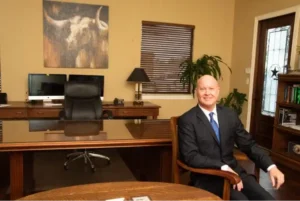 Greg Baumgartner founded Baumgartner Law Firm in 1985 and has spent more than four decades representing injured people and families. He holds dual law degrees, graduated from the Trial Lawyers College, and has received an AV Preeminent rating from Martindale-Hubbell.
The firm remains selective so that serious cases receive personal attention. Clients can speak directly with Greg rather than being treated as a number in a high-volume system. Each case is evaluated for the evidence needed to prove fault, the full effect of the injury, and whether the available insurance or assets can support a meaningful recovery.
A serious case should be prepared with trial in mind from the beginning. That approach affects which evidence is preserved, which experts may be needed, and how the claim is presented to the insurance company. The decision to settle or file suit should be based on the case, not pressure to close a file.