
Jet Ski Accident Lawyer in Houston, Texas
 As spring and summer arrive in Texas, our waterways fill up with families, weekend riders, and rental customers eager to enjoy a day on the water. Jet skiing ranks among the most popular ways to spend that time. It also ranks among the most dangerous when something goes wrong. If you or a loved one was hurt in a personal watercraft crash, a Jet Ski Accident Lawyer in Houston, Texas can help you understand your rights and pursue the compensation you deserve.
Our personal injury lawyers have helped accident victims across the Texas coast for more than 40 years. Call (281) 587-1111 for a free, no obligation consultation.
Understanding Jet Ski Accidents
A jet ski accident can change your life in seconds. One moment, you are riding across the water. Next, you are facing emergency surgery, weeks of physical therapy, or worse. At our firm, we represent victims of personal watercraft crashes, boat accidents, drowning incidents, and other water-related injuries throughout the greater Houston area.
We know what these cases involve, from coordinating with the U.S. Coast Guard and Texas Parks and Wildlife investigators to dealing with marine insurance carriers that work hard to minimize your claim. Our goal is simple. We want to take the legal weight off your shoulders so you can focus on healing.
What is Considered a Jet Ski Under Texas Law?
Under Texas law, a jet ski is classified as a personal watercraft (PWC). The Texas Parks and Wildlife Department defines a PWC as a vessel designed to be operated by a person sitting, standing, or kneeling on the vessel rather than inside it. The definition covers jet skis, Sea Doos, WaveRunners, and similar craft.
The classification matters more than people realize. Because a PWC is legally a vessel, the same negligence and liability rules that apply to boats also apply to jet skis. That affects how your claim is investigated, who can be held responsible, and what damages you can recover.
What are the Laws for Operating a Personal Watercraft in Texas?
In Texas, there are specific laws and regulations that govern the operation of personal watercraft, including jet skis. Some of these laws include:
- The operator of a personal watercraft must be at least 13 years old.
- The operator of a personal watercraft must have a valid boating safety certificate.
- The operator of a personal watercraft must wear a properly fitting life jacket.
- The operator of a personal watercraft must not operate the vessel while under the influence of alcohol or a controlled substance.
- Jet skis may only be operated between sunrise and sunset.
These rules exist for one reason. They save lives. When an operator ignores them and someone gets hurt, that violation often becomes powerful evidence of negligence in a personal injury case.
Jet Skis are Popular in Texas
Jet skiing draws thrill seekers because the experience is hard to match. Modern personal watercraft can reach speeds well over 60 mph, accelerate aggressively, and turn on a dime. For experienced riders in open water, that is a thrill. For inexperienced riders in crowded conditions, it is a recipe for disaster.
Many people underestimate how dangerous a jet ski really is. The assumption that water somehow softens a crash is wrong. Hitting another vessel, a dock, or a swimmer at high speed produces forces similar to a car crash, with none of the protection a car provides.
According to U.S. Coast Guard recreational boating statistics, personal watercraft consistently rank among the top vessel types involved in fatal accidents, with dozens of riders killed and hundreds more seriously injured every year. The numbers underline a simple truth. A jet ski is not a toy. It is a powerful motor vehicle that demands respect.
Call a Texas Jet Ski Accident LAWYER FOR HELP!
Primary Causes of Jet Ski Accidents in Houston, TX
After years of handling these cases, we see the same patterns again and again. The leading causes of serious jet ski crashes include operator inexperience, excessive speed, alcohol use, inattention, and reckless maneuvers in crowded areas.
Reckless Driving:
The number one cause of jet ski accidents is reckless operation. Weaving through boat traffic, jumping wakes too close to other vessels, and ignoring no-wake zones can cause serious collisions with other watercraft, docks, buoys, or swimmers. The water has rules just like the road, and operators who treat them as suggestions put everyone around them at risk.
Driver Inattention:
A jet ski moving at 50 mph covers more than 70 feet every second. Looking down for a moment to adjust a strap or check a phone is enough time to cross into another rider’s path. Inattentive operation is one of the most preventable causes of jet ski crashes.
Dealing with an insurance company after this kind of incident usually requires legal help to establish what actually happened on the water.
Inexperience:
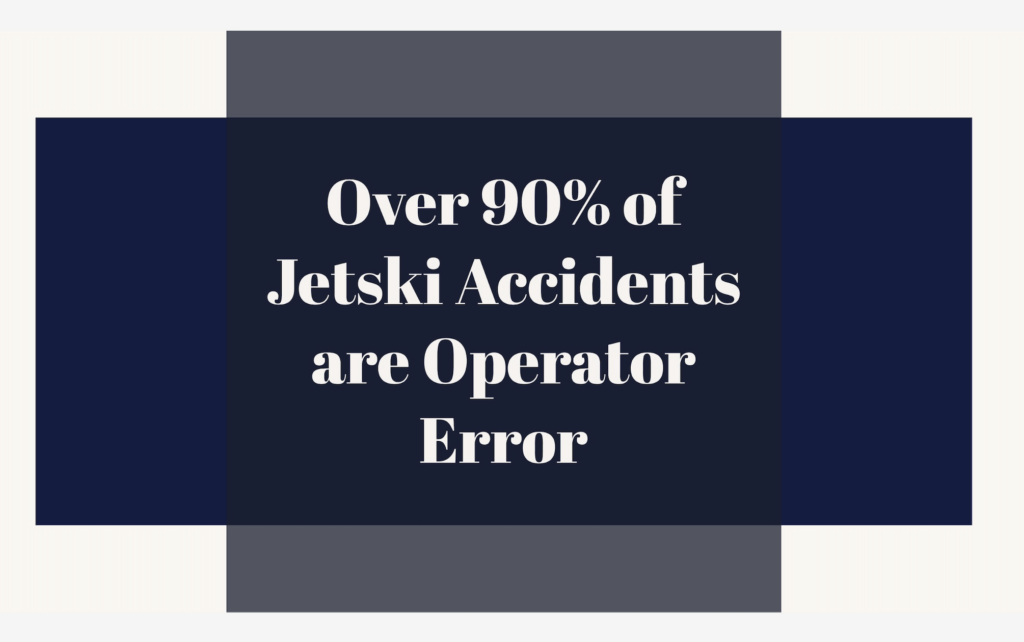
Anyone who has rented a jet ski knows how little training is actually required. A short verbal briefing at a rental booth is not preparation for handling a 700 pound machine in unfamiliar water. Studies show that roughly 32 percent of operators involved in PWC accidents had little to no training, and as many as 90 percent of jet ski accidents involve some form of operator error.
Comfort breeds carelessness. New riders often feel safe because they are on water, then push past their skill level. The result is the same kind of negligence that drives most other serious injury claims. If you were hurt because someone else lacked the training to operate their craft safely, talk with our law firm about your options.
Alcohol Use
Boating while intoxicated is just as illegal as driving while intoxicated in Texas, and it is just as deadly. Alcohol slows reaction time, impairs judgment, and dulls the balance and coordination a jet ski demands. A meaningful share of fatal PWC crashes involve an impaired operator, and prosecutors and civil juries treat that conduct accordingly.
Common Injuries in Jet Ski Accidents
The injuries we see in jet ski cases tend to be severe. Riders have almost no protection. A collision at speed throws the body forward, often into water, another vessel, or a hard object. Common injuries include:
- Traumatic brain injuries and concussions from impact with another vessel or the water surface
- Spinal cord injuries and herniated discs from violent impacts
- Broken bones, particularly in the arms, legs, ribs, and collarbone
- Lacerations and orifice injuries caused by the jet pump intake or another rider’s PWC
- Burns from fuel fires or contact with hot engine components, which may require a Houston burn injury lawyer
- Near drowning and drowning fatalities when riders are thrown from the craft
- Hypothermia after extended time in the water
- Internal organ damage from blunt force trauma
When a crash takes a life, families have the right to pursue a wrongful death claim against the responsible party. Child victims deserve particular attention given the heartbreaking pattern of fatal child drownings in Texas on our waterways.
Where Jet Ski Accidents Happen in the Houston Area
Greater Houston is surrounded by water, and that water draws riders from all over the region. Most of the jet ski cases we see involve crashes on:
- Lake Conroe, which has earned a reputation as one of the deadliest lakes in Texas due to heavy weekend traffic and alcohol related incidents
- Lake Houston, where shallow areas and dense holiday traffic create dangerous conditions for inexperienced riders
- Clear Lake, a popular destination connecting to Galveston Bay where recreational and commercial vessel traffic intersect
- Galveston Bay and the Gulf Coast, where wind, waves, and ship channels add complexity that catches casual riders off guard
- Trinity Bay, Sheldon Lake, and the San Jacinto River, where wakes and submerged hazards have caused many serious injuries
If your crash happened on any of these waters, our team understands the local conditions, the agencies that investigate, and the operators and rental companies that work them.
Proving Negligence in Jet Ski Accidents
To win a personal injury claim involving a jet ski crash, you must prove negligence on the part of the at-fault party. Negligence is the legal idea that everyone owes a basic responsibility to act reasonably and avoid harming others. To establish it after a jet ski accident, four elements must be shown:
To establish negligence in a jet ski accident, you must demonstrate the following four elements:
- Duty of Care: The first step is showing that the at-fault party owed you a duty of care. For a jet ski operator, that means a duty to operate the craft safely, follow Texas boating laws, and look out for other people on the water.
- Breach of Duty: Next, you must show that the operator breached that duty. A breach can take many forms. Operating recklessly, riding while intoxicated, failing to keep a proper lookout, or ignoring weather and traffic conditions all qualify.
- Causation: You must show that the breach directly caused your injuries. In other words, the harm would not have happened but for the operator’s careless conduct. This element often becomes the central battle in disputed cases, which is one reason a thorough investigation matters so much.
- Damages: Finally, you must show that you suffered real, measurable harm. That includes medical bills, lost income, pain and suffering, and other losses tied to the crash.
Texas follows a modified comparative negligence rule. As long as you are 50 percent or less at fault for the accident, you can still recover compensation, although your award is reduced by your share of fault. If you are 51 percent or more at fault, you recover nothing. This rule is one reason insurance companies push so hard to shift blame onto injury victims, and one reason having experienced counsel matters.
Compensation You Can Recover After a Jet Ski Accident
The financial cost of a serious jet ski injury adds up quickly. Helicopter transport, emergency surgery, weeks of rehabilitation, lost wages during recovery, and ongoing care can run into hundreds of thousands of dollars. Texas law allows injury victims to recover several categories of damages.
Economic damages cover the measurable financial losses caused by the crash, including:
- Past and future medical expenses
- Lost wages and lost earning capacity
- Rehabilitation and physical therapy
- Property damage to your craft, gear, or vehicle
- Out of pocket costs related to your treatment
Non economic damages compensate for losses that do not come with a receipt, such as:
- Physical pain and suffering
- Mental anguish and emotional distress
- Loss of enjoyment of life
- Disfigurement and scarring
- Loss of consortium for spouses
In cases involving especially reckless conduct, such as a drunk operator or a rental company that knowingly handed a craft to an unqualified rider, punitive damages may also be available.
Texas Statute of Limitations for Jet Ski Accidents
In Texas, you generally have two years from the date of the accident to file a personal injury lawsuit under Texas Civil Practice and Remedies Code Section 16.003. Wrongful death claims also carry a two-year deadline, measured from the date of death. Miss the deadline, and your right to compensation is usually gone for good.
There are limited exceptions, such as cases involving minors or claims against a government entity, but they are narrow and have their own strict notice requirements. The safer approach is simple. Talk to a lawyer well before the two-year mark so evidence can be preserved and your case built properly.
What to Do After a Jet Ski Accident
The hours and days after a jet ski crash often determine how strong your eventual claim will be. If you are physically able, take the following steps:
- Get medical attention immediately, even if you feel fine. Adrenaline can mask injuries like concussions and internal bleeding.
- Report the accident to Texas Parks and Wildlife or the local sheriff’s office. Texas law requires reporting any boating accident that involves death, disappearance, injury beyond basic first aid, or significant property damage.
- Document everything. Take photos of the craft, the scene, any visible injuries, and the surrounding water conditions. Collect contact information from witnesses before they leave.
- Save your gear. Damaged life jackets, helmets, and other equipment can be important evidence later.
- Do not give a recorded statement to the other side’s insurance company before talking with an attorney.
- Keep records of every medical visit, prescription, and missed day of work.
- Call a jet ski accident lawyer before contacting the rental company or insurer.
Rental Jet Ski Accidents and Who Can Be Held Liable
Many of the serious crashes we handle involve rented personal watercraft. When you sign a rental agreement, the staff will often hand you a stack of waivers and assume that it absolves them of any liability. It does not. Texas law allows injured riders to pursue claims against several parties, depending on the facts, including:
- The operator who caused the crash, whether a rental customer or a private owner
- The rental company, if it failed to provide proper safety instruction, rented to an unqualified operator, or supplied a defective craft
- The manufacturer, if a defect in the jet ski itself contributed to the injuries
- A maintenance provider, if poor servicing caused a mechanical failure
- A property owner, if dangerous conditions on the water or shoreline contributed to the crash
A signed waiver does not automatically bar your claim. Texas courts often refuse to enforce waivers that try to release a company from its own gross negligence, and many waivers are written so broadly that they collapse under legal scrutiny. Do not assume your case is hopeless because you signed paperwork. Let an experienced lawyer review the agreement and the facts before deciding.
Frequently Asked Questions
How much is a jet ski accident case worth in Texas?
There is no single answer. The value depends on the severity of the injuries, the cost of medical care, lost income, the long-term impact on your daily life, and the available insurance coverage. Minor injury claims may resolve for tens of thousands of dollars, while catastrophic injury and wrongful death claims can reach into the millions.
Do I need a boating license to operate a jet ski in Texas?
Texas does not issue a boating license, but anyone born on or after September 1, 1993 must complete an approved boater education course before operating a personal watercraft alone.
Can children operate a jet ski in Texas?
The minimum age is 13. Children under 13 may ride only with a supervising adult who is at least 18 years old. Even older teenagers must complete a boater education course before operating alone.
Does homeowner’s insurance cover a jet ski accident?
Sometimes, but not always. Many standard homeowner’s policies specifically exclude watercraft above a certain horsepower, which includes most modern jet skis. A separate watercraft or recreational vessel policy is often required, and rental companies usually carry their own commercial coverage.
Who is liable when a rental jet ski is involved in a crash?
Liability can fall on the operator, the rental company, the manufacturer, or some combination of them. The specific facts, the rental agreement, and the operator’s level of experience all matter.
What is the statute of limitations for a jet ski accident in Texas?
Two years from the date of the accident for personal injury claims, and two years from the date of death for wrongful death claims.
Do I have a case if I was a passenger on the jet ski?
Yes. Passengers who are hurt because the operator made a careless decision can usually file a claim against the operator’s insurance, even when the operator is a friend or family member. The claim is against the policy, not the person.
For a FREE Consultation Contact Us Today
"*" indicates required fields
Our Experienced Houston Personal Injury Lawyer Can Help!
For a Free Consultation with a Preeminent Rated Injury Lawyer
Case Results
$5,750,000.00 Truck Accident - Wrongful Death
We represented a truck driver who lost control of his rig and jackknifed across the roadway, killing two innocent victims. We obtained more money for the death of the truck driver who caused the accident than the other “truck accident lawyers” got for the families of the innocent victims killed by the truck driver in the accident.
$6,000,000.00 Daycare Injury
We represented a young child injured at a daycare center. The case was settled before trial for millions above the daycare liability policy.
Confidential Settlement Commercial Vehicle Crash - Wrongful Death
Commercial vehicle accident in which we uncovered numerous violations of the trucking regulations. The trucking company required a confidential settlement so others would not know how much they had to pay us.
Confidential Settlement Burn Injury
Our client was burned in a house fire. The insurance company denied any responsibility. But they paid our full demand after filing a lawsuit and before trial.
Confidential Settlement 18-Wheeler Accident - Wrongful Death
Wrongful death case involving an 18-wheeler. The trucking company disputed liability. Yet, the insurance companies were forced to pay us the highest damages ever for the trucking company.
Baumgartner Law Firm
Call an Experienced Jet Ski Accident Lawyer In Houston for Help
If you or someone you love was hurt in a Houston area jet ski crash, do not face the insurance company alone. The Baumgartner Law Firm has spent more than 40 years helping injured Texans secure full and fair compensation for serious accidents.
Contact us today for a free, no-obligation case review. We will listen to your story, explain your rights in plain English, and help you decide on the right next step.
Call (281) 587-1111 or request your free consultation online.
About Our Law Firm in Houston
Houston personal injury attorney Greg Baumgartner heads the Baumgartner Law Firm.
Our firm was established in 1985 and has helped thousands of injury victims get maximum compensation for their cases. If you have been injured in an accident in Houston, TX, contact us for a free, no-obligation consultation. (281) 587-1111.
Baumgartner Law Firm has limited its law practice to serious personal injury and fatal cases. Our legal team has won maximum compensation for thousands of accident victims and recovered millions of dollars for real people like you.
testimonials
Client Reviews
Mayra T
Houston Personal Injury Victim
Mr. Greg is a great personal injury lawyer. Looking for the best help? Call Baumgartner Law Firm!
Brian Wilson
Houston Personal Injury Victim
I highly recommend this law office. Greg Baumgartner is knowledgeable, dependable, honest and truly has the client’s best interests at heart.
Callie M
Houston Personal Injury Victim
Greg, a personal Injury Lawyer at Baumgartner Law Firm represented me in my personal injury case. I am very happy with the case result. Baumgartner is a GREAT law firm with GREAT people. They get RESULTS.
Cindy S
Houston Personal Injury Victim
My experience with Baumgartner law firm was excellent. They took the time to hear my concerns and kept me informed throughout the process. They fought for the best resolution for my case. Working with Greg and Lissa gave me peace of mind in a scary and stressful situation. I highly recommend their services.
Mr. Greg is a great personal injury lawyer. Looking for the best help? Call Baumgartner Law Firm!
Mayra T
Houston Personal Injury Victim
I highly recommend this law office. Greg Baumgartner is knowledgeable, dependable, honest, and truly has the client's best interests at heart.
Brian Wilson
Houston Personal Injury Victim
Greg, a personal Injury Lawyer at Baumgartner Law Firm represented me in my personal injury case. I am very happy with the case result. Baumgartner is a GREAT law firm with GREAT people. They get RESULTS.
Callie M
Houston Personal Injury Victim
My experience with Baumgartner law firm was excellent. They took the time to hear my concerns and kept me informed throughout the process. They fought for the best resolution for my case. Working with Greg and Lissa gave me peace of mind in a scary and stressful situation. I highly recommend their services.
Cindy S
Houston Personal Injury Victim
NEED HELP? HAVE QUESTIONS?
"*" indicates required fields